

A Long History of Classic Ford Trucks
The brand that put the world on wheels with the Model T, Ford’s history is every bit as strong in trucks as it is in automobiles. For over a century, Ford has produced countless innovative, influential, and just plain well-loved trucks for people who want their vehicles to work as hard as they do. In this post Dick Smith Ford brings attention to just a few models in its long, rich truck history.
Technically, the minimum age for a classic vehicle is 25 years old. So, with one exception, despite the many exciting trucks Ford has produced in the past quarter-century, this post adheres to the 25-year dictate in its vehicle selection.
1917 – 1929 Model TT
We start by acknowledging that the Model T was often configured as a truck, usually featuring a flatbed behind an open or closed cab with a single bench seat. Nine years after the debut of the T, Ford launched the Model TT (Model T Truck), which had a longer wheelbase and a more robust frame while still utilizing the Model T cab and engine. Again, the flatbed was the default configuration, but third-party companies provided pickup and other shapes for the rear. While the Model T is credited with putting America on motorized wheels, its impact on rural America may have been even greater, simply because they had farther to travel and needed to get their products to market. Ford sold 1.3 million Model TTs before following up with Model AA and BB truck versions of its motor cars.
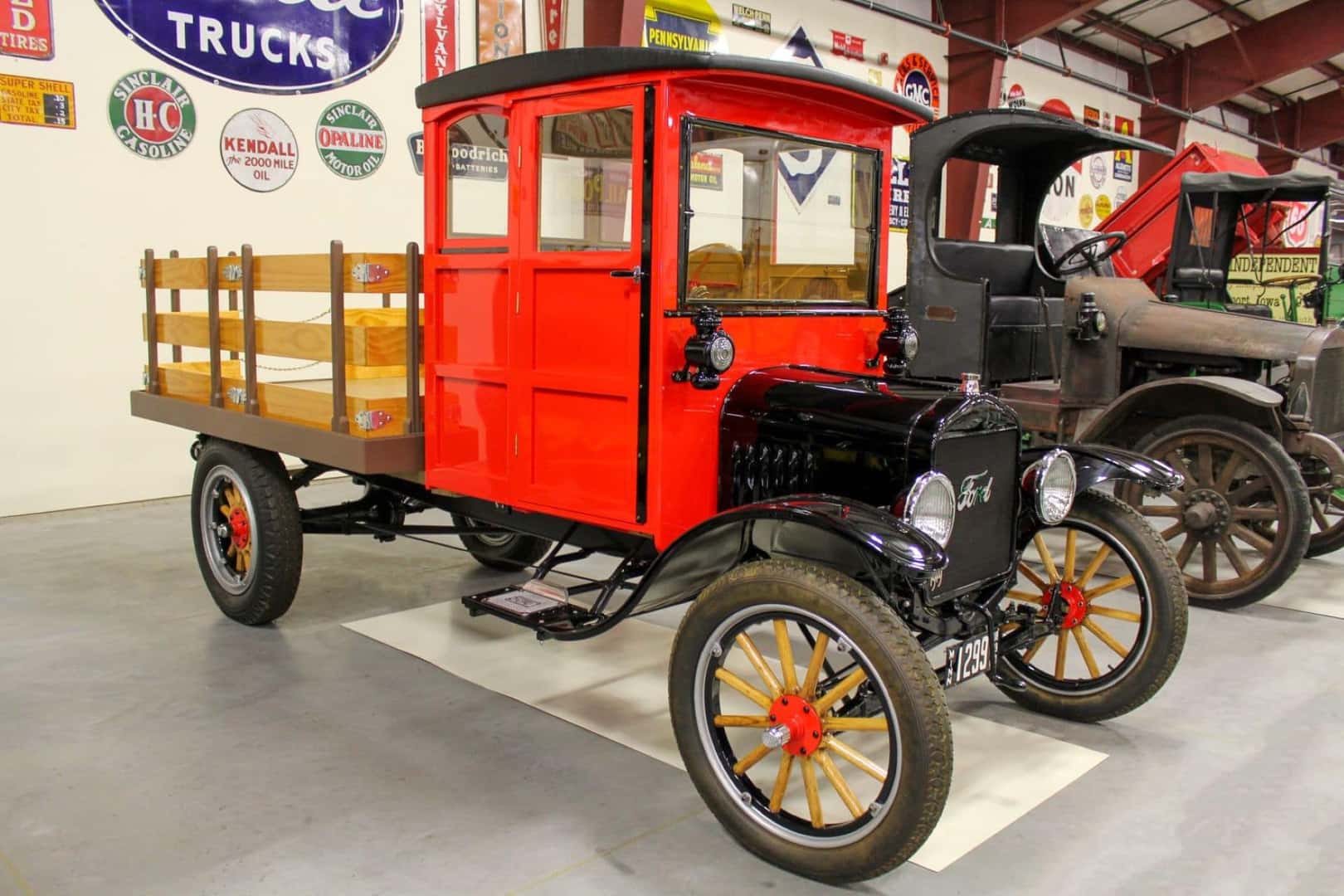
Red 1919 Ford Model TT Parked in Showroom
1925 – 1927 Model T Pickup
After the Model TT and toward the end of the T’s reign, Ford discovered there was still a market for a lighter-duty pickup than the TT. Customers had been converting Model Ts for cargo hauling for years, but this was the first Model T-based pickup from the factory. It was available with either a removable soft top or a fixed hard top. When the Model A replaced the T, a pickup model was available from the start with a longer bed, while still offered in either a soft or hard top.
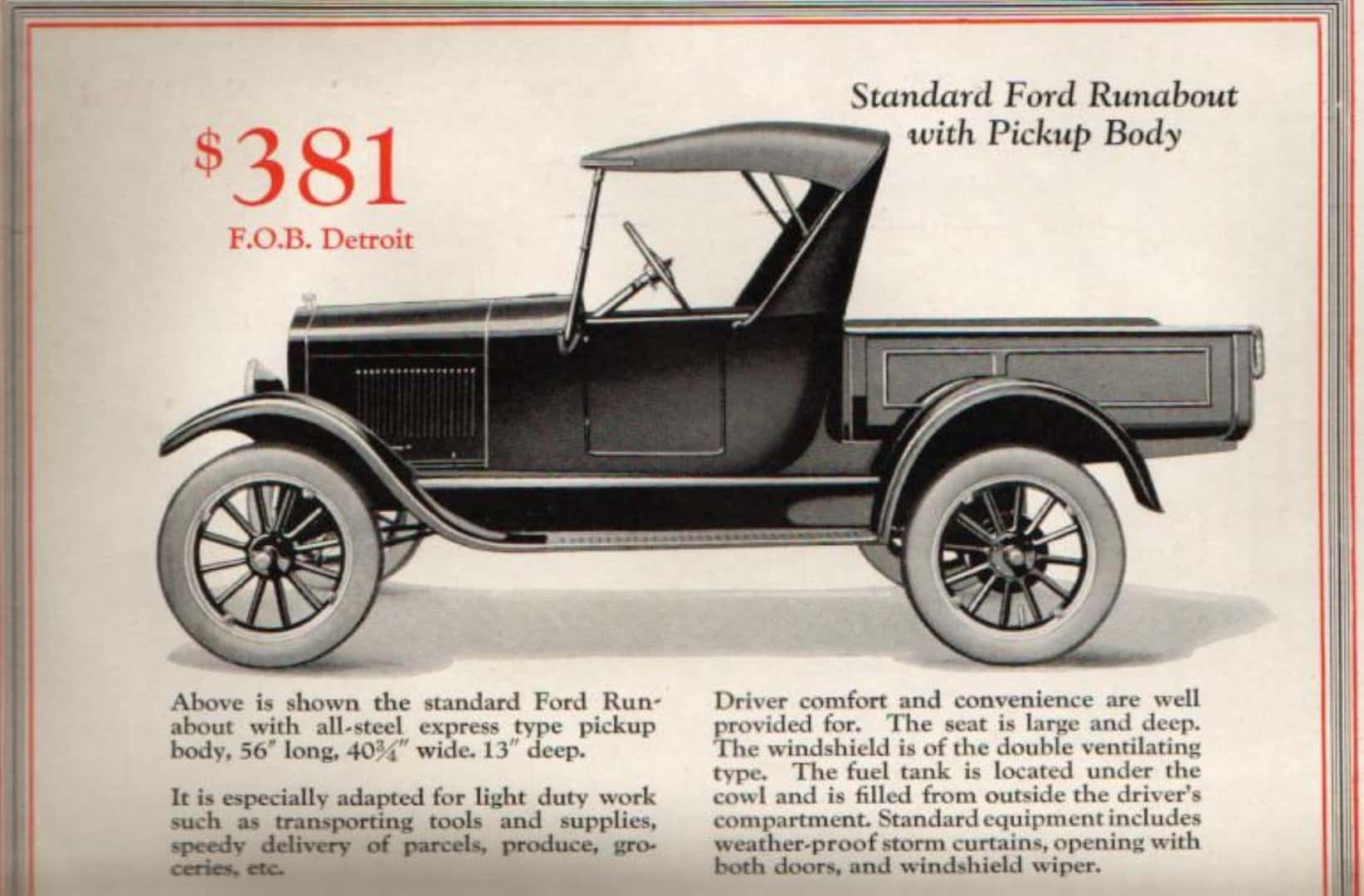
Black Model T Pickup Advertisement
1930 – 1931 Model AA
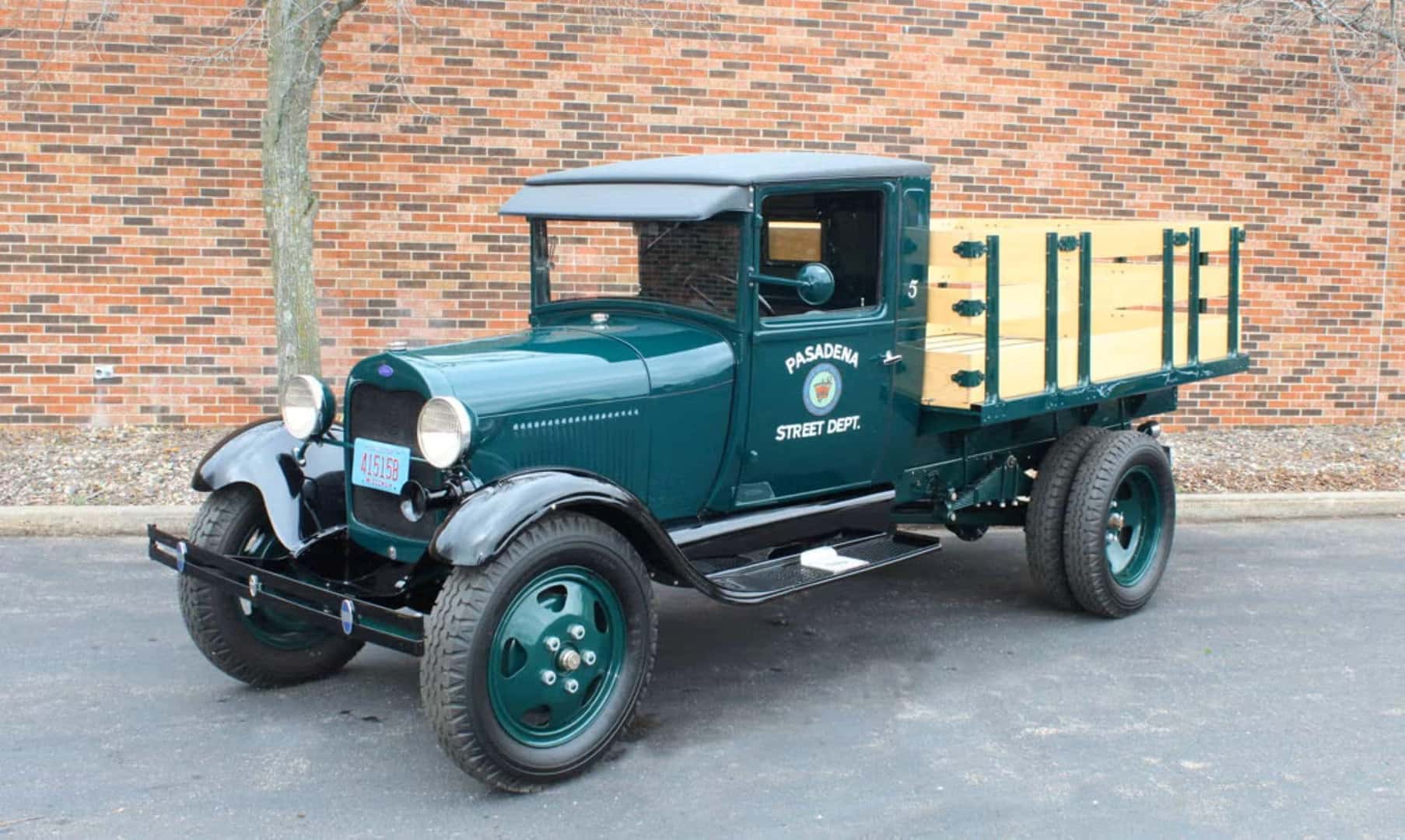
Just as the Model A was the more sophisticated follow-up to the Model T, the Model AA was a far more advanced truck for its time. It featured a modern gearbox with foot-controlled clutch and brakes for all four wheels instead of just two. The Model AA simply offered more value than competing trucks and would have thrived, but for the Depression, which made it difficult for much of America to afford any vehicle.
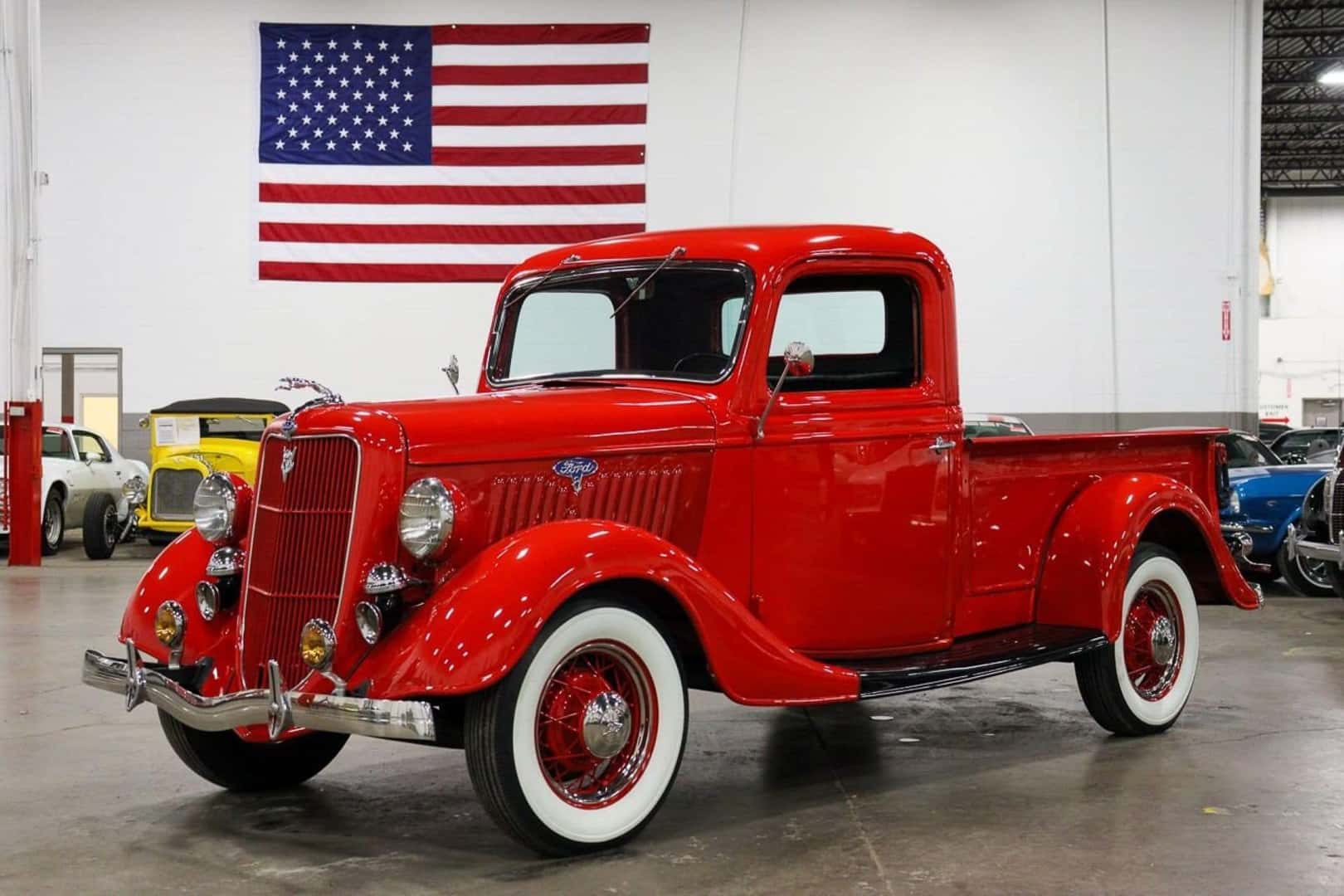
1935 Model 50 Pickup
After offering only 4-cylinder engines, this was Ford’s first V8 pickup featuring the legendary Flathead V8, which Ford had been developing since the beginning of this Depression-era decade. With front styles still resembling the cars of that period, including the iconic 1932 and 1937 models, this vehicle remained in production until 1941, when Ford shifted its production capabilities to World War II machinery.
1942-1947 Half-Ton
These were the first Ford pickups to deviate from Ford car styling. They featured a blunter front end, known for their integrated headlights. Inside, the suspension evolved from a single spring for each of the front and rear solid axles to separate semi-elliptic leaf springs for each wheel. With the addition of shock absorbers—at least in the front—rear shocks, a heater, a sliding rear window, and an oil bath air filter were additional first-time options. Civilian models ended in their first year, and the stylish chrome headlight bezels and door handles were replaced with a simple paint finish for the military-directed trucks.
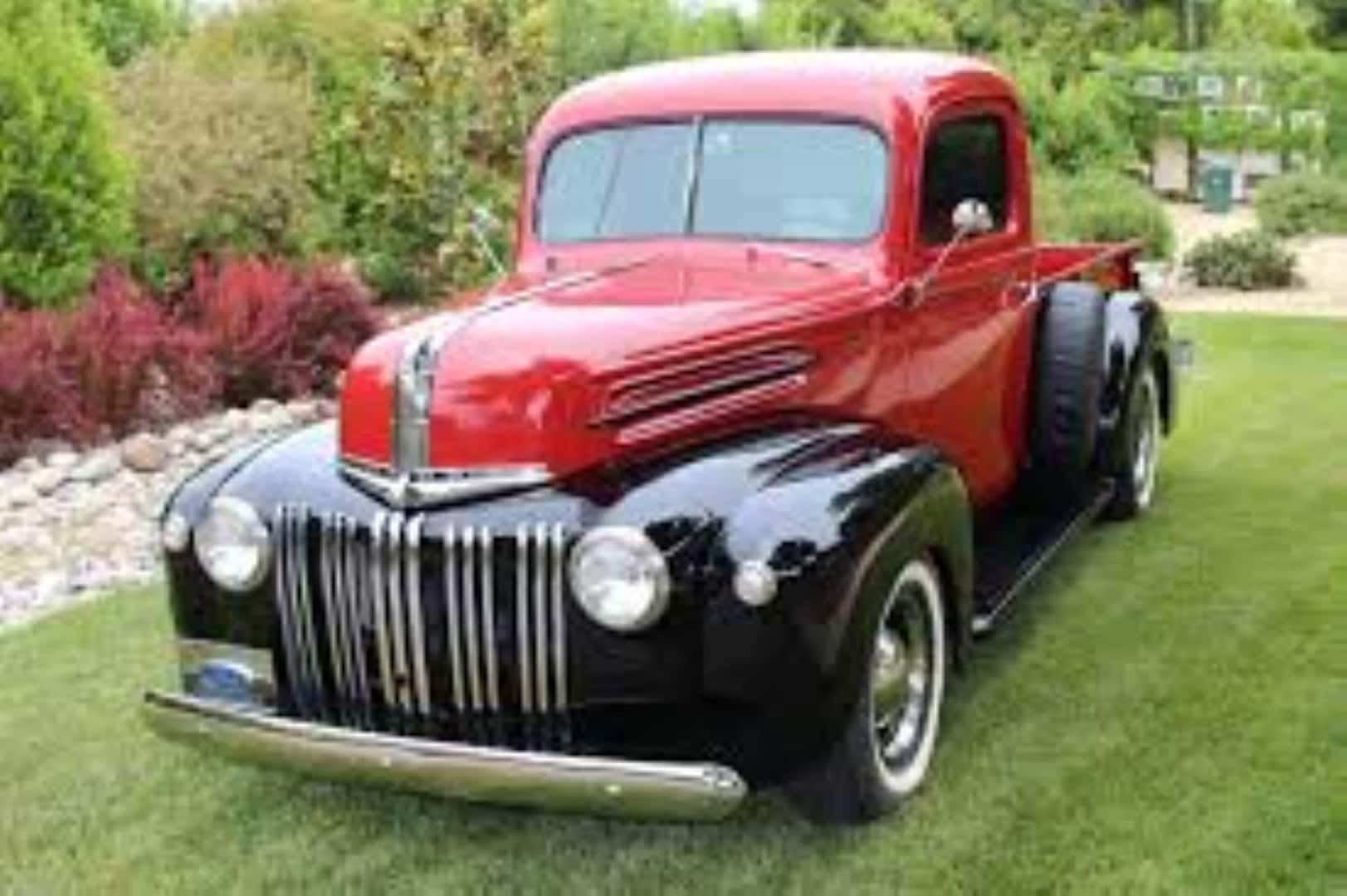
1951 Ford Pickup F-Series
Ford began the use of the F-Series nomenclature in 1948. The 1951 model was the first truly post-war Ford pickup design, and with it came the acknowledgment that even in a truck, interior comfort matters. Most notable was the “Million Dollar Cab,” so named because design and tooling cost $1 million, which Ford claimed to have “living room” comfort. The cab was taller and wider, and the fit and finish were significantly improved. This extended to the “grain-tight” tailgate, which was so named for the claim that you could fill the bed with grain and the tailgate shut tight enough that it wouldn’t leak out. The manual shifter was moved from the floor to the steering column, improving the situation for anyone sitting in the middle of the bench seat. The trucks were powered by both straight-six and V8 engines, and two wheelbases were available: 114 inches for the 1/2-ton F-1 series and 122 inches for the 3/4-ton F-2.
The front end wrapped body-color fender panels around a large opening within which were free-standing headlights connected by a large horizontal cross bar with three vertical teeth. The height of this section allowed the hood above it to be lower and flatter, for a more aggressive appearance.
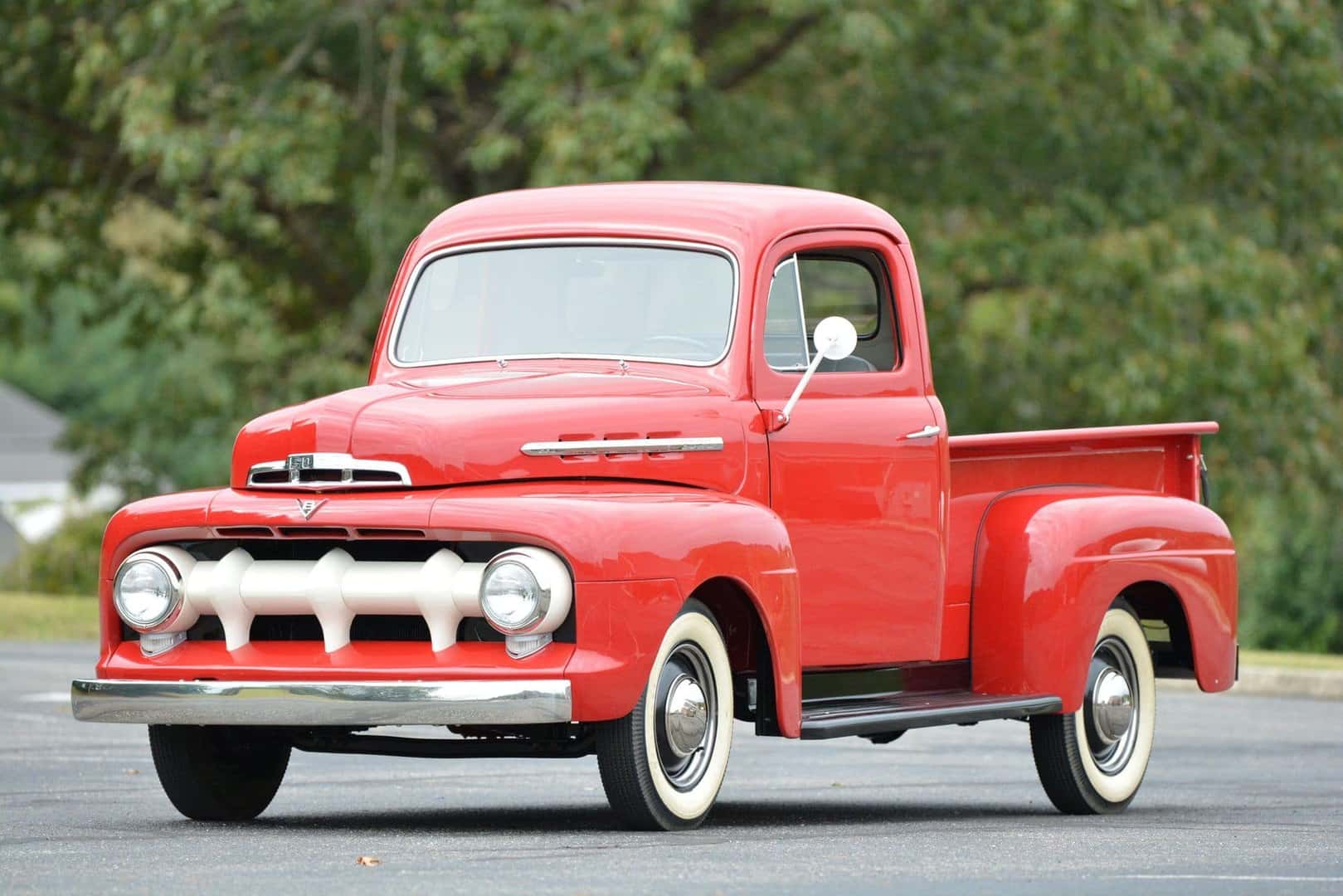
1953-56 Ford F-100
Some consider this second generation of the F-100 line to be the best-looking pickup truck in history. The model was larger and featured more powerful engines than the post-WWII truck that preceded it, and it was available in ½ ton, ¾ ton, and one-ton variants. In 1956, it gained a wraparound windshield, and the entire cab was designed around it. This was the last Ford pickup without front fenders distinct from the rest of the body.
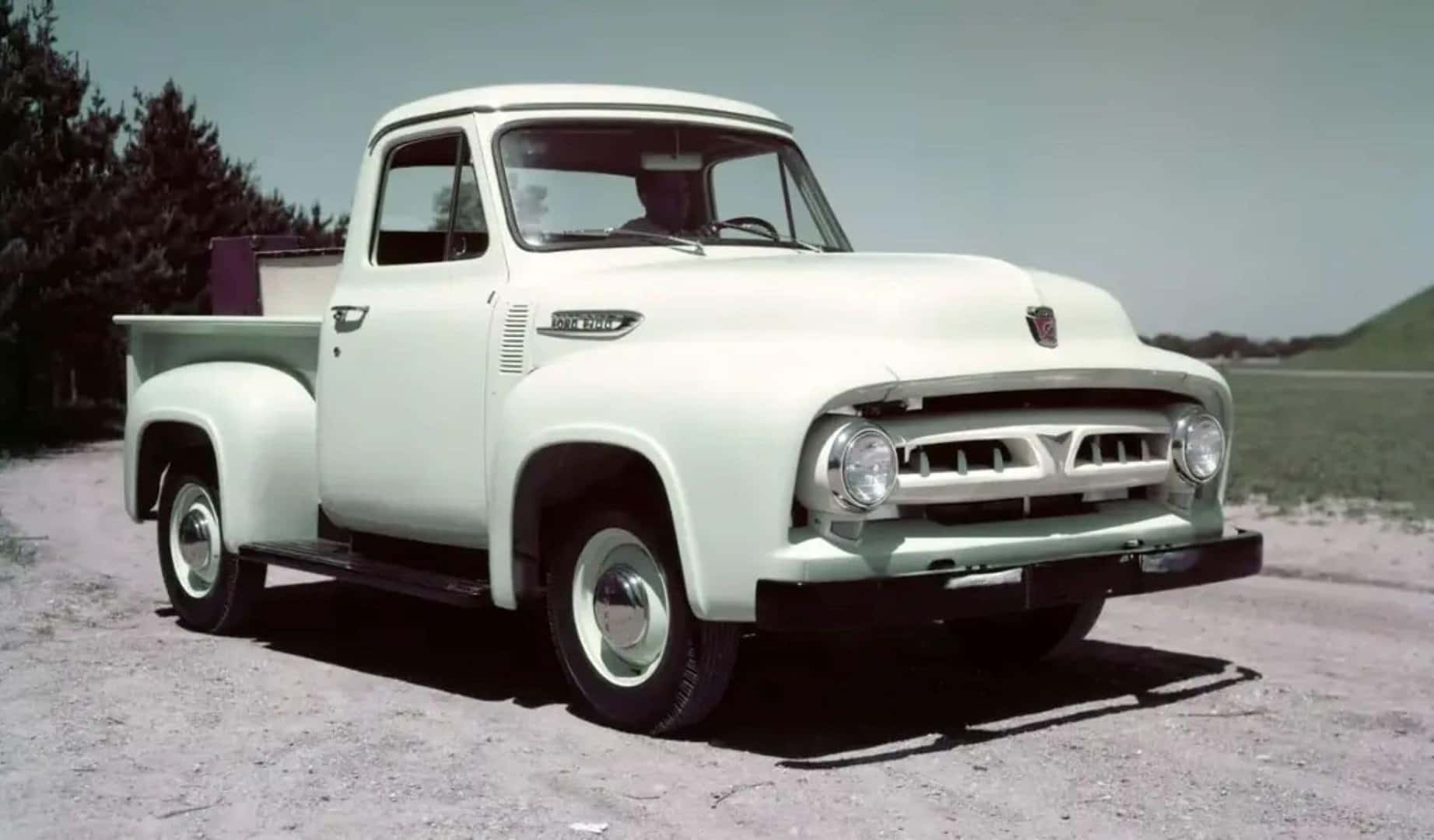
1954 – 59 F-100 Panel Truck
Arguably, one of the coolest-looking trucks in Ford history was the F-100 Panel Truck. The roof extended to the tailgate to enclose the bed, and the tailgate was replaced by twin side-hinged doors. There was no seating behind the front seats. Most of these vehicles were used for commercial delivery, and the panels behind the doors were windowless for security, providing an ideal location for company branding. When the F-series bodies squared off in 1957, so did the panel van, making them appear more modern for the day but slightly less distinctive from today’s perspective than the wide-fender, hump-hooded models from the first few years.
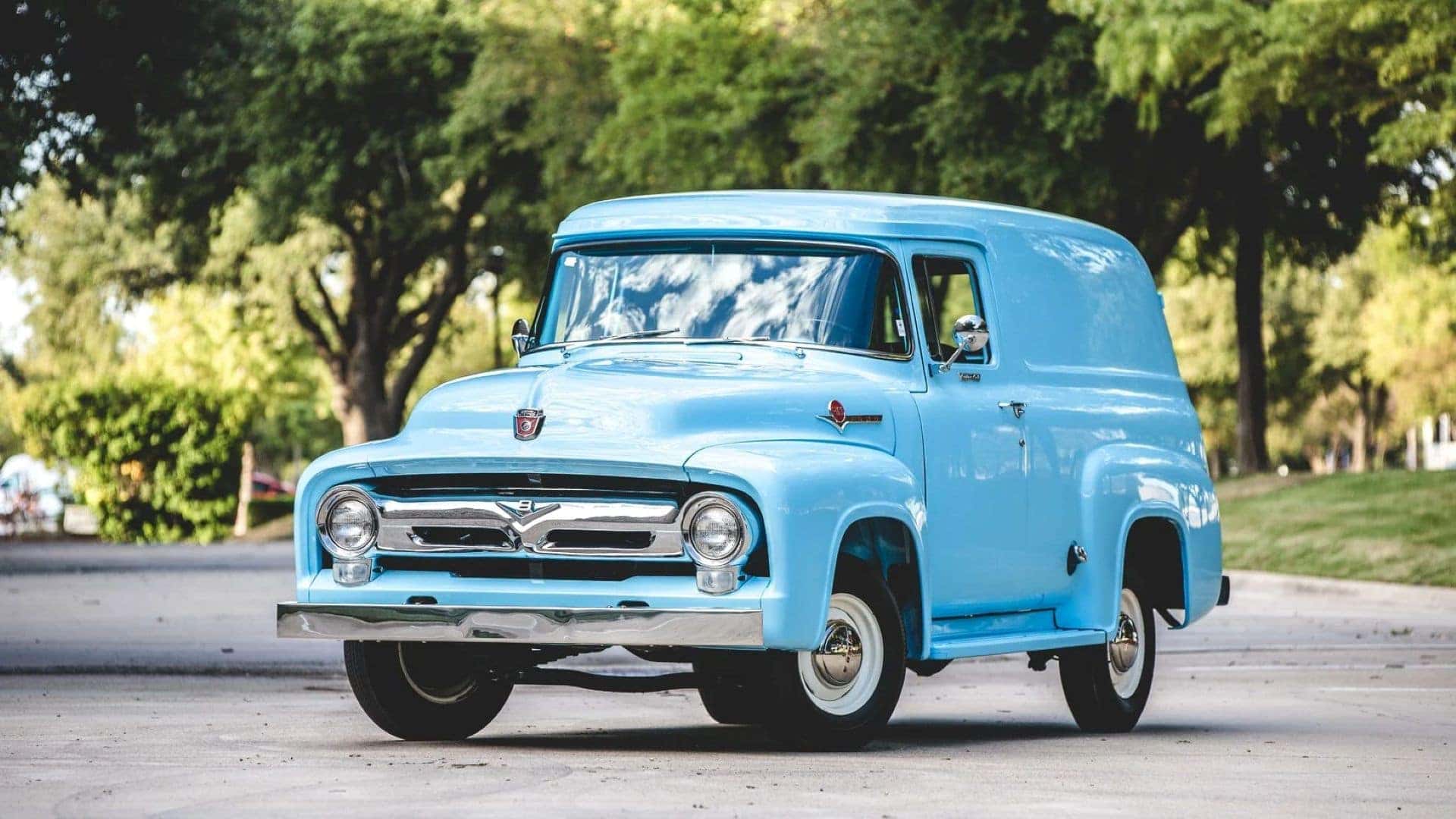
1957 “Slab-side” Pickup
In 1957, Ford made the significant move of bringing the rear wheel wells within the bed, creating a much more modern square-off appearance, enhancing cargo-carrying capacity, and essentially establishing the standard for nearly all pickup trucks that followed. Two years later, Ford introduced 4-wheel drive for the first time in its trucks, marking the beginning of another important direction for pickup trucks.
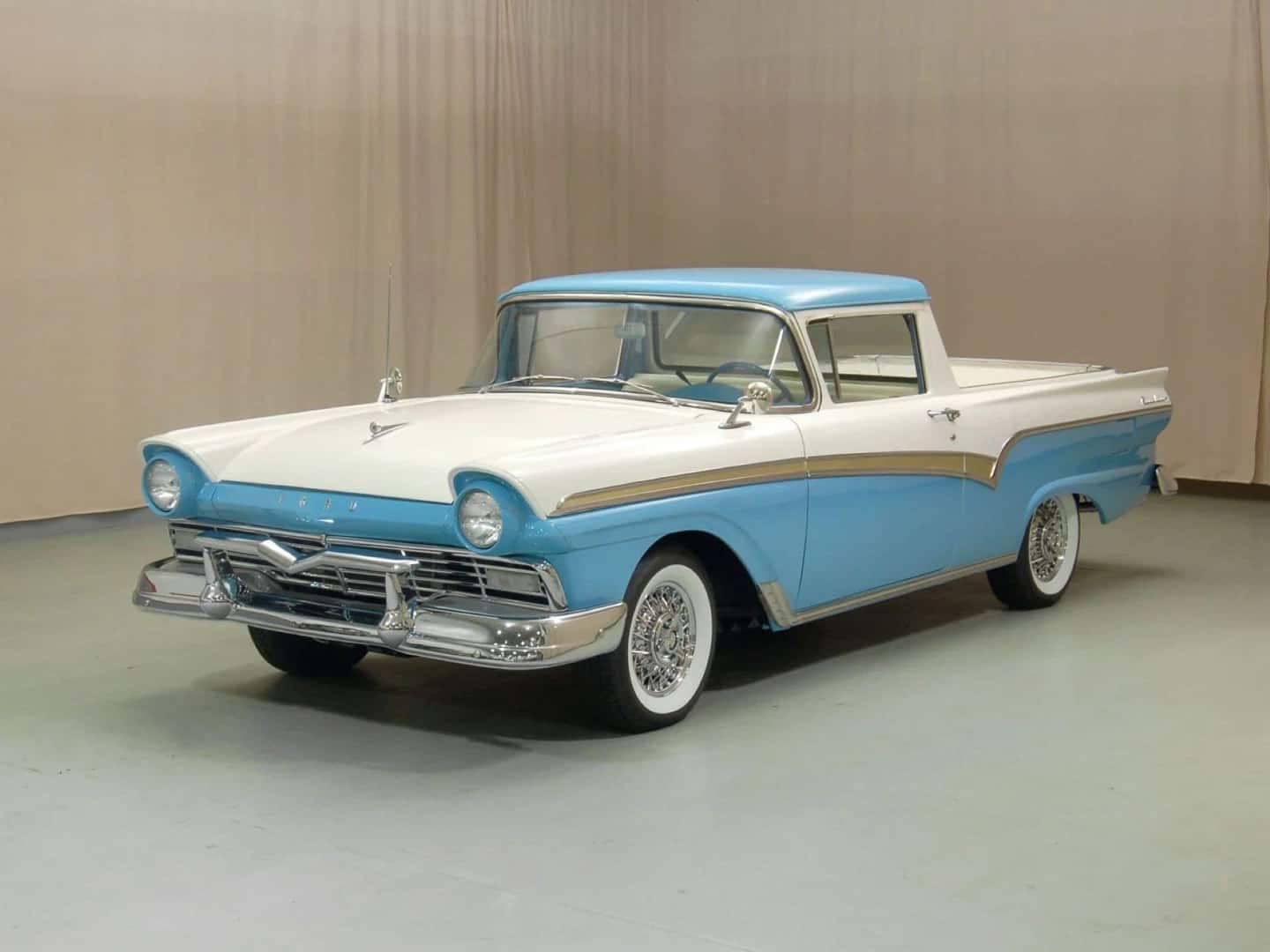
1957 Ranchero
Fifteen years after separating its truck and car styling, Ford recombined the two for this unique model. Ford of Australia had been producing such vehicles since 1932, nicknaming them Utes (for utility), and Ford decided to explore the market in the States. Ford already had the 2-door Ranch Wagon, and for this year, they sealed the windows and replaced the interior with a bed liner to create the Courier Sedan Delivery vehicle. This marked a further step, with the roof cut off behind the front seats and a panel along with a rear window separating the cab and bed. For whatever reason, Chevrolet’s copycat El Camino became better known, but Ford beat that model by two years.
In 1960, Ford transitioned the Ranchero to the all-new compact Falcon line, providing a distinctly more economical truck than the F-Series. In 1965, Ford moved to the mid-size Fairlane platform, effectively matching the size of the El Camino, which moved to the mid-size Chevelle platform a year earlier. The Ranchero remained on the mid-size platform until 1979, after it had been effectively replaced by the compact captured import Courier.
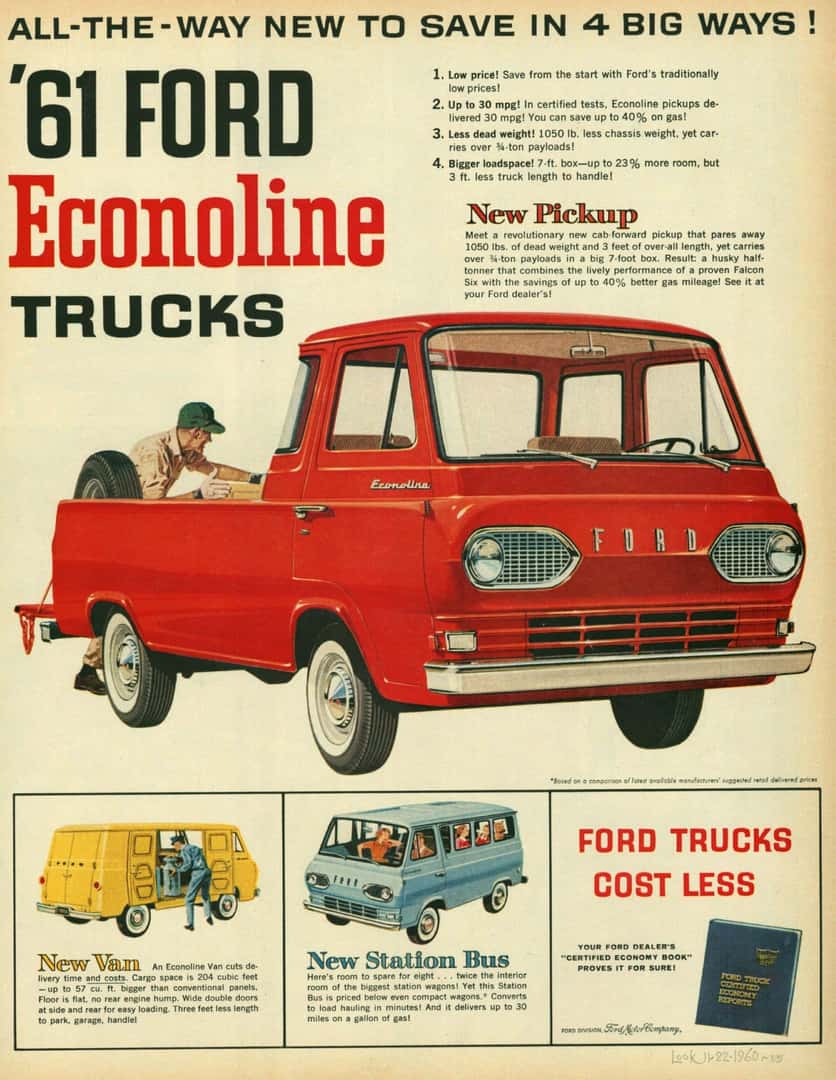
1961 – 1967 Econoline
Officially known as the E-Series, the Econoline replaced the F-Series panel van. This cab-over model featured a remarkably short wheelbase, positioning the engine behind the front axle and just behind the front seats. This compact engine space necessitated the use of inline-6 engines. Unlike the panel truck, the van was available for both cargo and passenger transport, and an open-bed version also existed, providing a third pickup truck option alongside the F-Series and Ranchero.
Distinctive for its twin mini grilles extending and pointing inward from the headlights, the first-generation Econoline remained largely unchanged for seven years until the introduction of the second-generation model in 1968. Singers Neil Young, Nanci Griffith, and likely others recorded songs about it. Overall, there were four generations of this model before it was replaced by the Transit van.
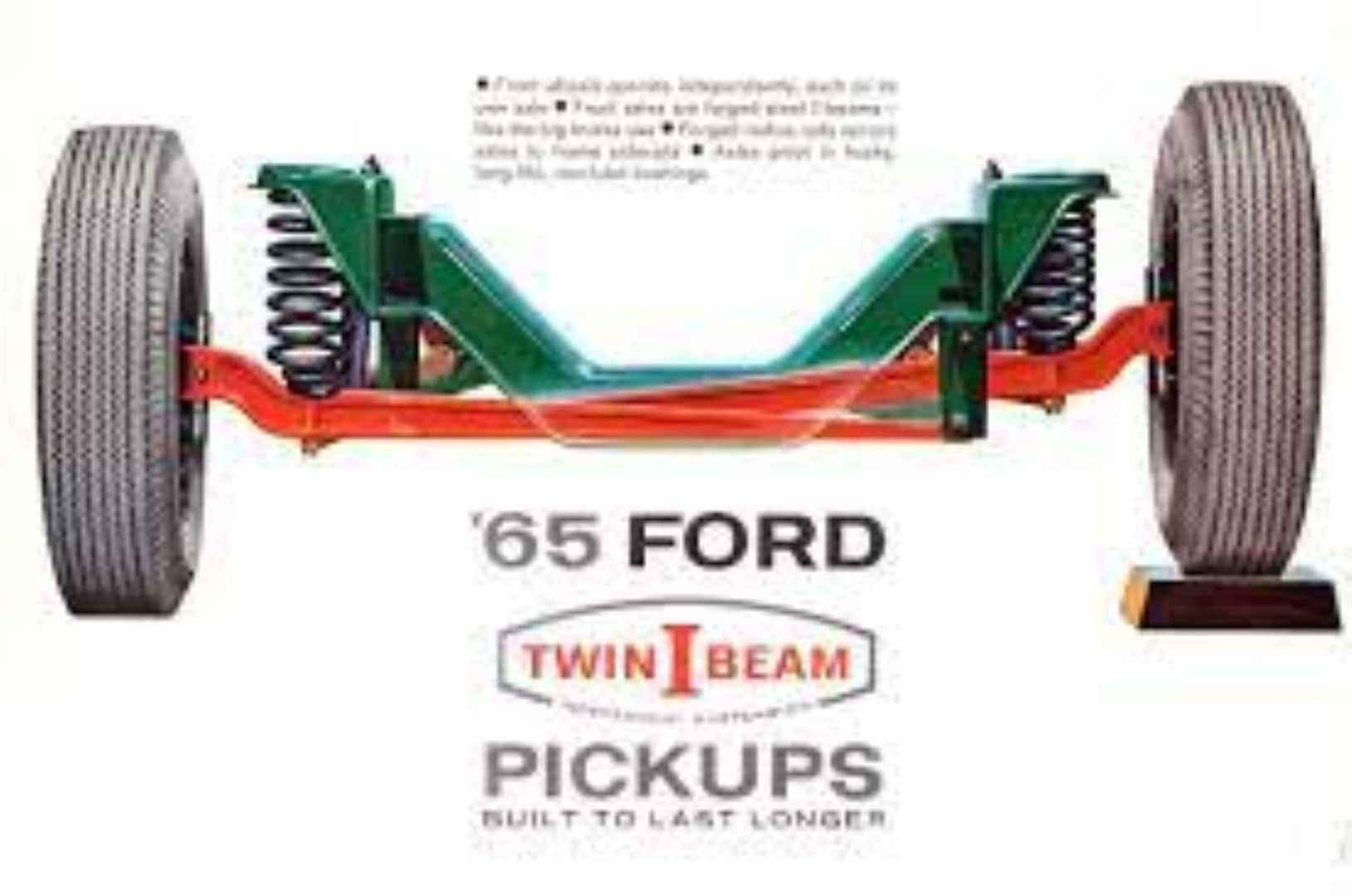
1965 Twin I-Beam Suspension
In 1960, Chevrolet introduced a front double wishbone independent suspension for its half-ton trucks. While this improvement enhanced the ride, Ford loyalists considered it too delicate. They believed the wheel travel was too limited for real truck duty when compared to the single I-beam solid axle suspensions that both manufacturers had previously used. Nonetheless, the ride quality of the Chevrolet trucks was attracting customers. The twin-I-beam suspension was Ford’s answer. Developed for rear-wheel-drive models, the front wheels operated independently from one another but were supported by their own robust I-beam, which was mounted on the opposite side of the chassis. This system was complemented by coil springs, while the leaf springs were reserved for the rear suspension. Ford took great pride in this achievement, allowing trucks to sport a “Twin I-Beam” badge for many years. Ford eventually adapted the suspension for 4WD models as well, and the basic design remains in use on F-250 and F-350 models to this day.
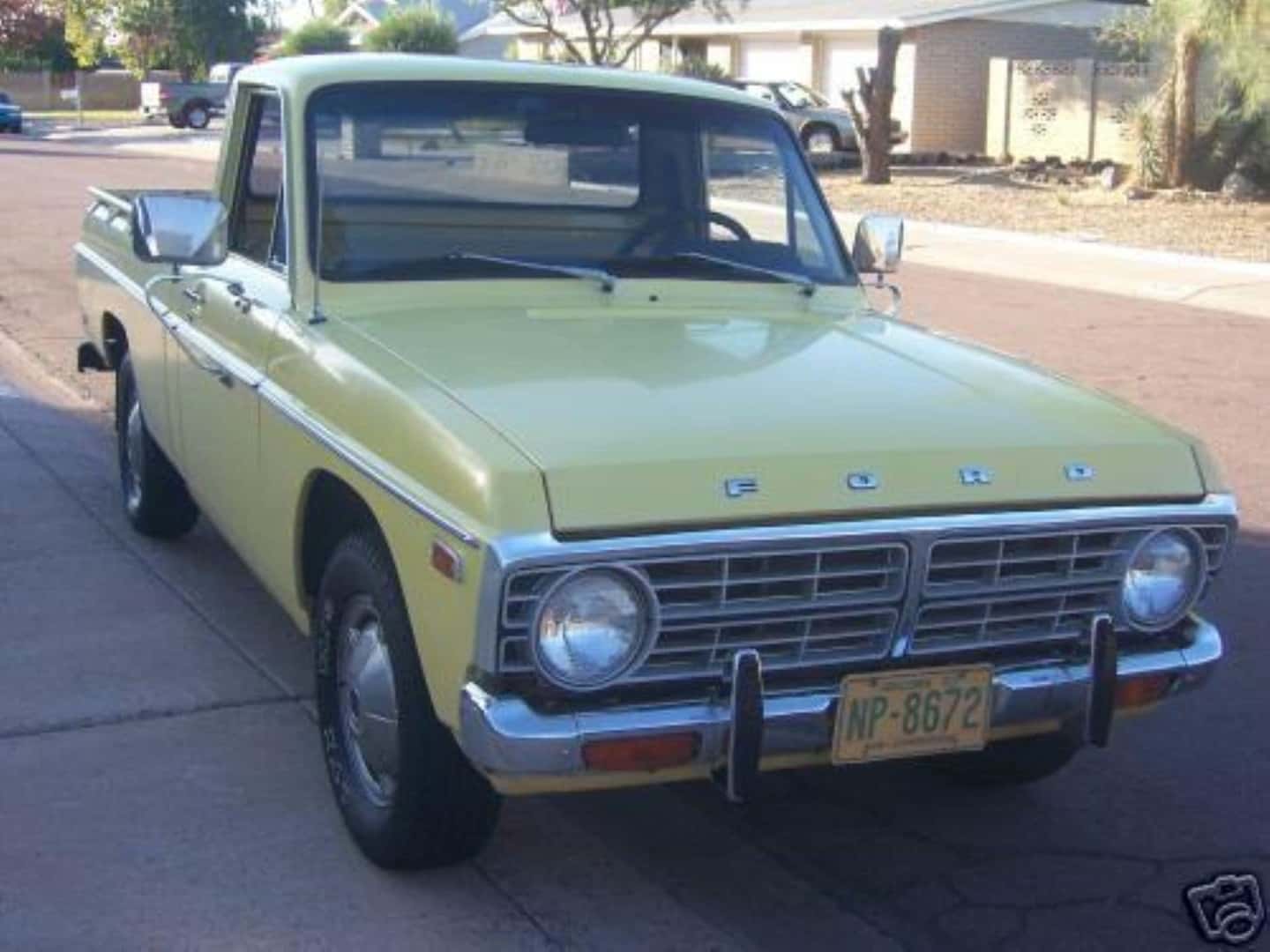
1972 – 1982 Ford Courier
The Courier name was first used for a panel version of the 1957 Ford 2-door wagon. In response to the popularity of Toyota and Datsun compact pickup trucks, Ford applied the name to an imported compact pickup truck designed and built by Mazda. To avoid the 25% “Chicken Tax” on imported trucks, Ford had the vehicle arrive with only the chassis and cab, attaching the bed in the U.S. While Mazda was promoting its rotary engine vehicles at the time, the Courier was equipped with a conventional 1.8-liter 4-cylinder engine paired with a 4-speed manual transmission. The second-generation Courier offered the Pinto’s 2.3-liter 4-cylinder engine as an option. All models were rear-wheel drive; however, an aftermarket supplier called Northwest A.T.V. in Kelso, Washington, converted around 1500 examples to the 4WD “Courier Sasquatch,” which was marketed on the West Coast.
1975 F-150
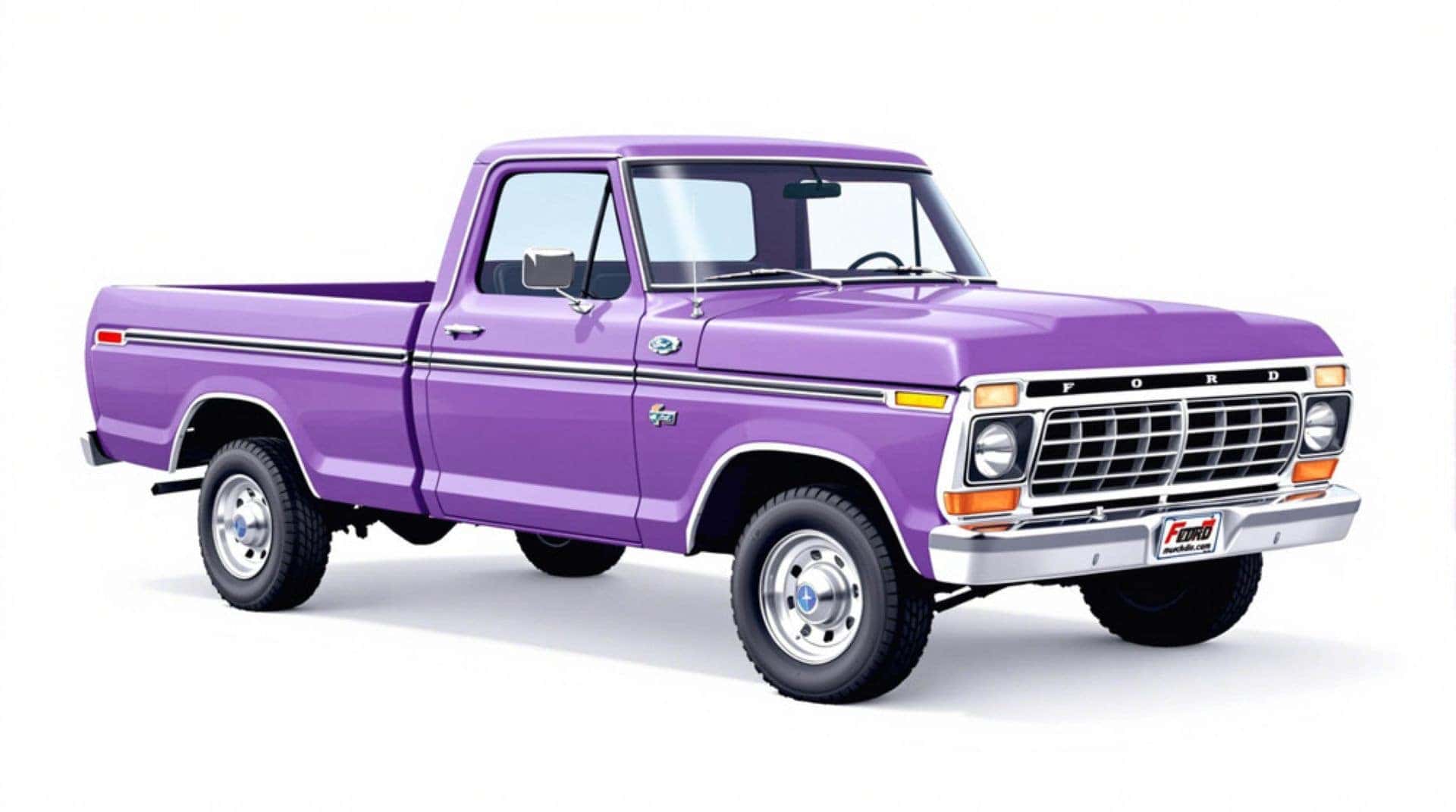
The sixth-generation F-series truck spanned from 1973 to 1979. Basic mechanics still dated back to the Twin I-Beam introduction of 1965. However, this generation brought important advancements such as front disc brakes, double-walled bed construction, and increased use of galvanized steel. Probably the most historic aspect of this era was the first use of the F-150 name for a model that slotted between the F-100 and F-150 in the 1975 model year. F-100 and F-150 models were sold concurrently until the F-100 moniker was dropped after the 1983 model year.
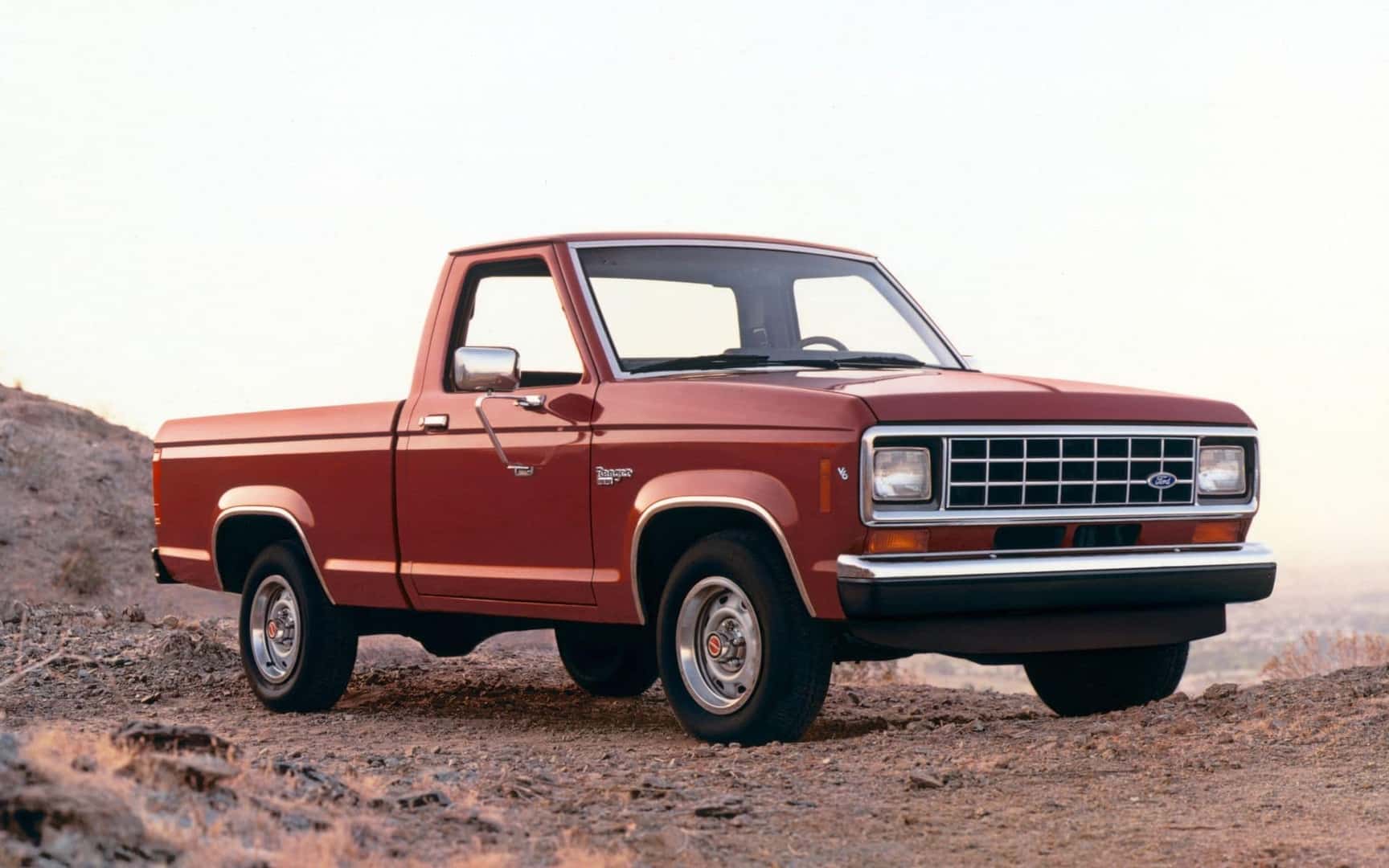
1982 Ranger
After selling rebadged Couriers from Mazda for ten years, Ford introduced its homegrown Ranger in 1982 as a 1983 model. With styling much more similar to the F-series, the truck featured 2.0- and 2.3-liter 4-cylinder engines and had a smaller version of the twin I-Beam suspension up front. Though much smaller than the F-series, its 1,600-pound payload capacity actually exceeded that of the F-100, which was discontinued the following year. Unlike the Courier, models were available with 4×4 drivetrains from the beginning, which became the basis for the Bronco II compact SUV launched in 1984. Six-foot and seven-foot beds were available, and a SuperCab model was introduced in 1989. The model continued through three generations until 2011, before returning in 2019.
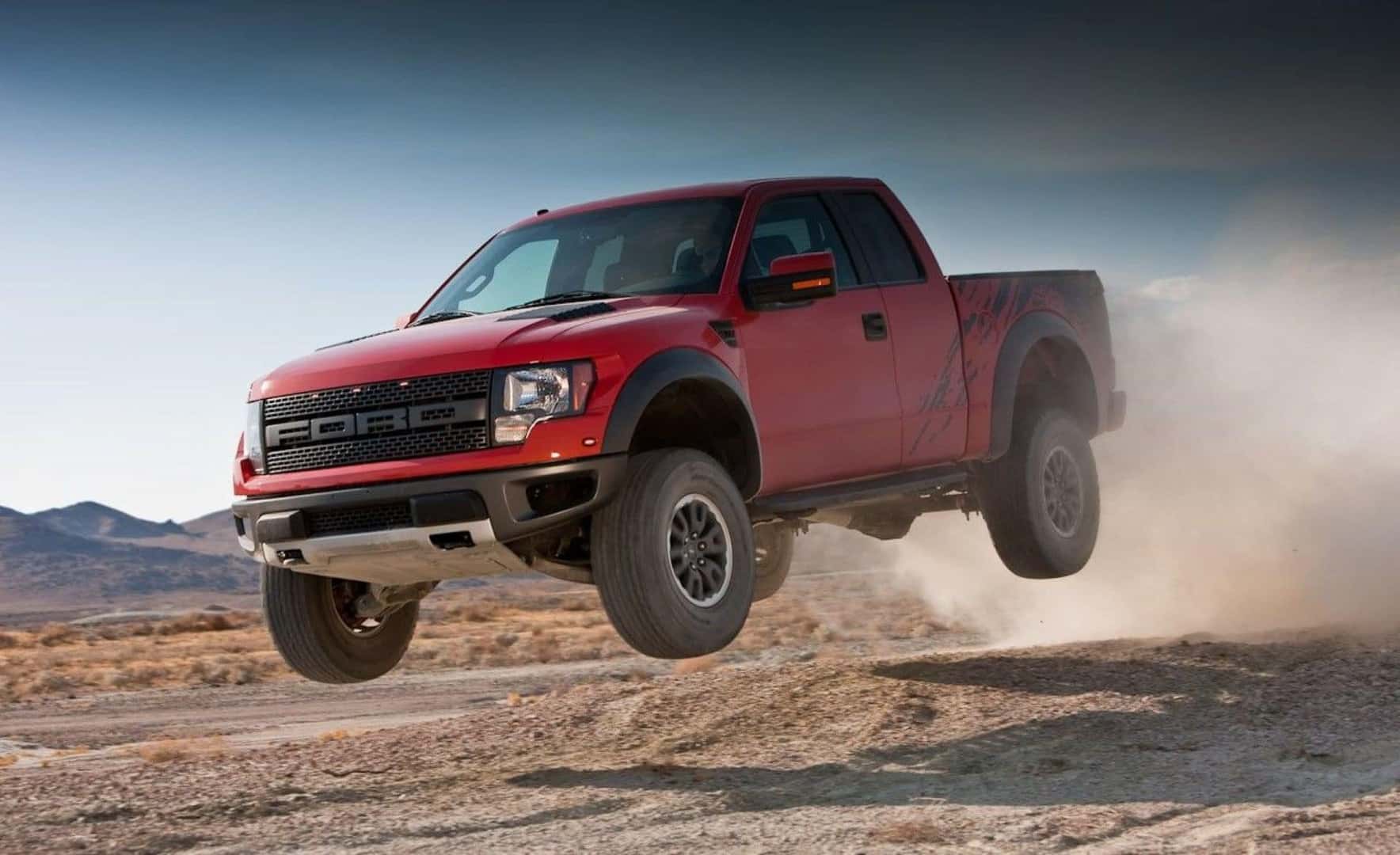
2010 – Present Raptor
Any model under 25 years old is technically not a classic, but the Raptor will undoubtedly achieve classic status in due time. The Raptor began as the highest-performing off-road F-series truck manufactured by Ford SVT (Special Vehicle Team) for the 2010 model year. Primarily designed as a factory desert racer, the original Raptor was available with either a 5.4L or 6.2L V8 (the 5.4L has since been discontinued) and equipped with Fox Racing internal bypass shocks, providing 11.2 inches of suspension travel in the front and 12.1 inches in the rear. A range of robust enhancements included multiple skid plates, fender flares, and large BF Goodrich KO tires. Although Chevrolet, GMC, and Ram have marketed similar models, the Raptor name has become synonymous with extreme off-roading trucks. The name has also been applied to Ranger and Bronco models featuring similar enhancements and intent.
Ford has indeed had a rich history in trucks, and this post only scratches the surface. Of course, Ford continues to have not only the best-selling truck but also the best-selling vehicle with the F-150 year after year. Not resting on its laurels, Ford continues to innovate with the practical and efficient Maverick, the wall-to-wall screens in the Expedition, and by being at the forefront of the EV transition with the F-150 Lightning. All these models are expected to become future classics in Ford truck history, but you can enjoy them in real time, starting with a visit to Dick Smith Ford.

0 comment(s) so far on A Long History of Classic Ford Trucks