

A Long History of Classic Fords
Dating back to 1903, Ford has a unique history in the automotive industry that stands apart from any other company or brand. Often described as the brand that put the world on wheels with the Model T, Ford has made its mark across nearly every vehicle category imaginable, creating countless iconic models along the way. Dick Smith Ford highlights just a few of the most renowned classic Ford models from the past century.
Technically, the minimum requirement for a classic car is that it must be at least 25 years old. However, for those who are not ready to consider a 2000 model year vehicle a “classic,” it can be beneficial for a vehicle to symbolize a significant advancement in engineering or design, or to have another historical connection.
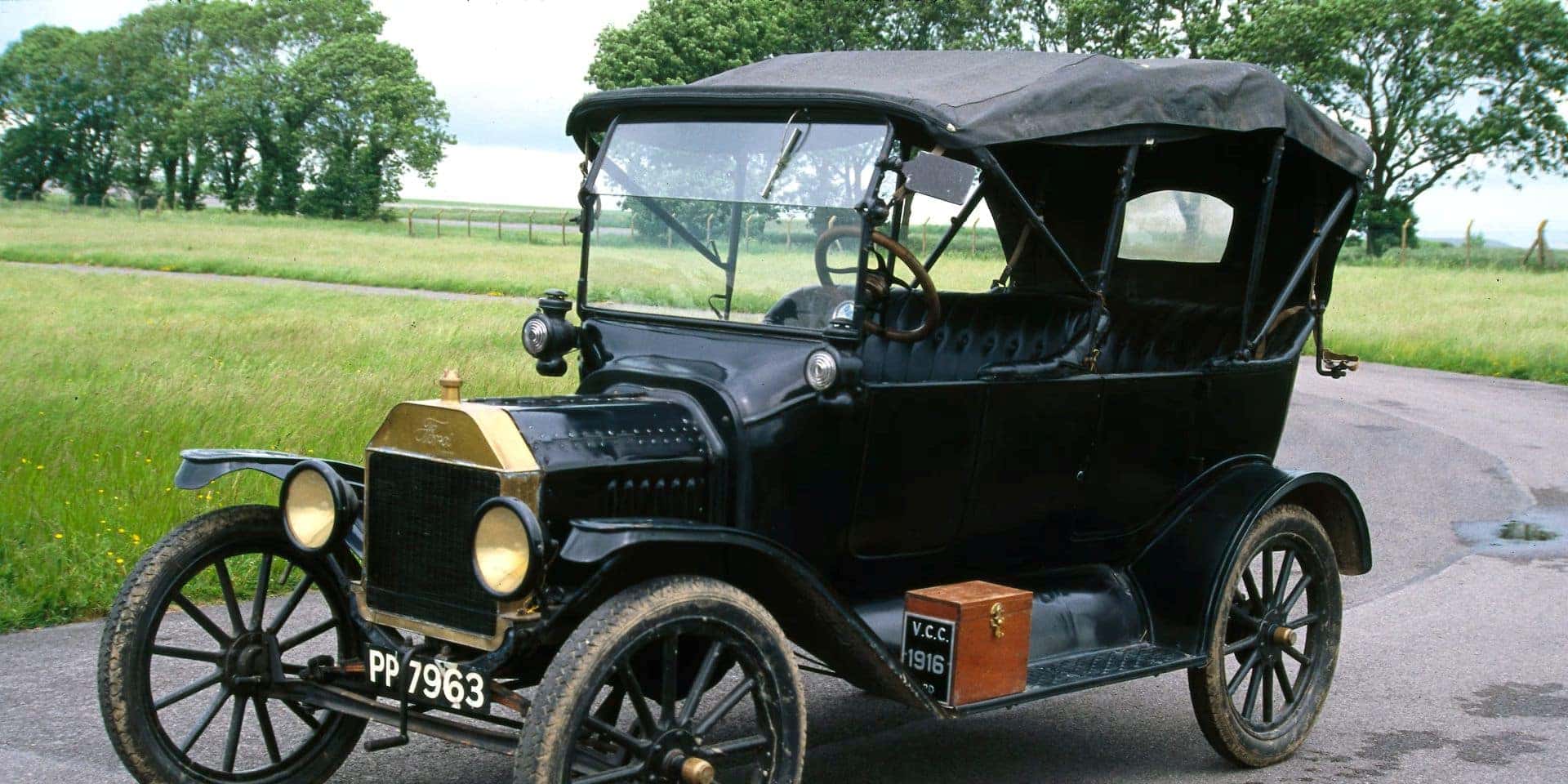
Model T
For Ford, the first model that fulfills all classic requirements is the Model T. Its historical significance cannot be overstated. Approximately 16.5 million units were produced during its 20-year run from assembly plants around the world. This simple 4-cylinder model revolutionized the assembly of mass-market vehicles and many other consumer products, transforming how the average family traveled. Savings from mass production allowed the vehicle’s original starting price of $780 in 1910 to drop to just $290 in 1924. Model Ts offered options such as one bench seat, two bench seats, soft tops, hard roofs, and even flatbeds. Later, after its consumer product era ended, its ubiquity provided a foundation for hot rodding that continues to this day.
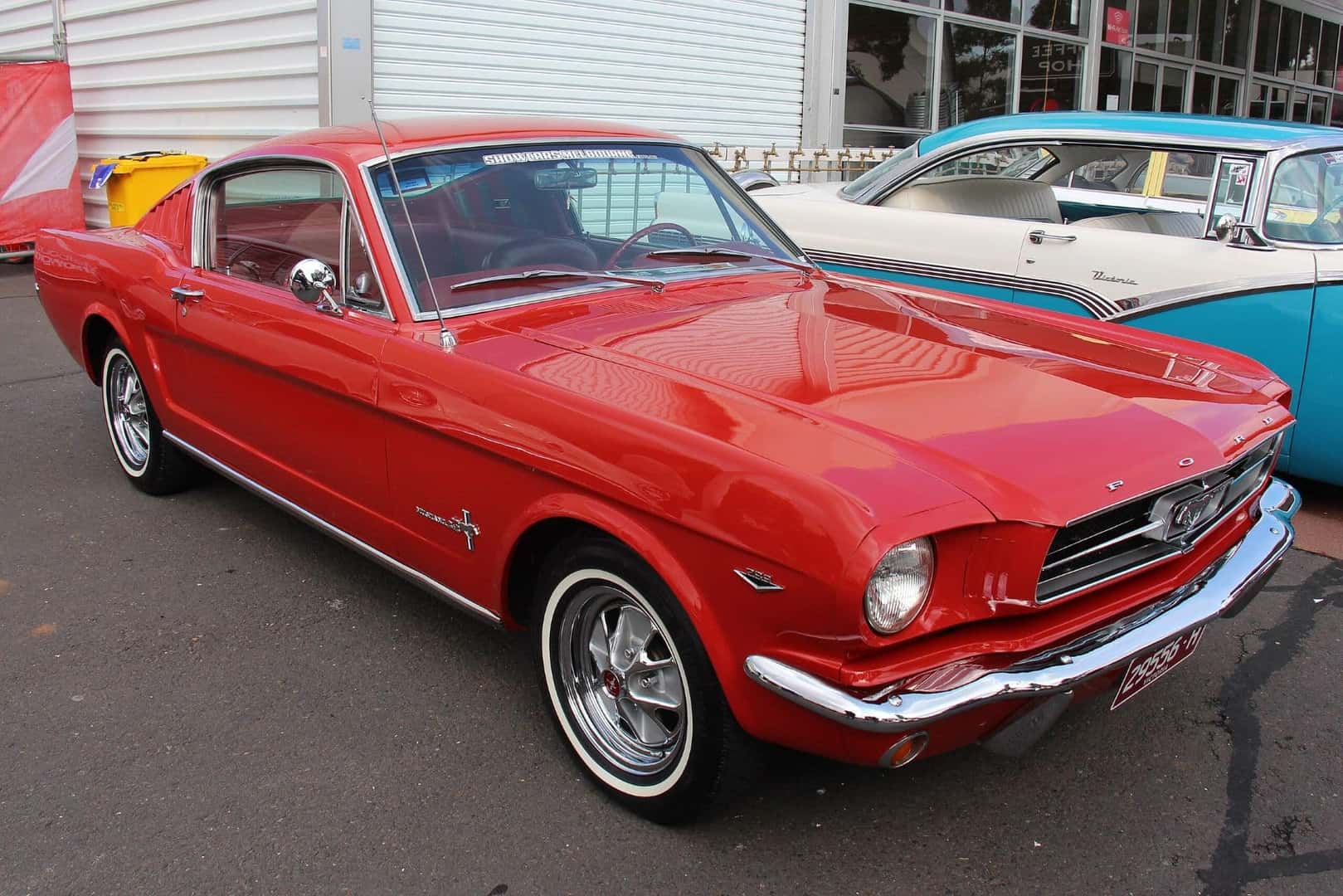
Mustang: The First Generation
There have been six generations of Mustangs, and one could argue that nearly any model leading up to the 2000 model year has classic status; however, most would agree that the first generation is the most iconic. No vehicle of the 1960s captured the nation’s attention like the 1964.5 Mustang. It was expected to sell about 100,000 units in its first year, but it ultimately sold 400,000 and reached a million sales just two years after its launch. Although the Plymouth Barracuda technically preceded it by 16 days, it was clearly the Mustang that created an entirely new sports coupe (and convertible) segment. Models ranged from mild to wild in performance, but all of them brought immense pride to their owners. Unlike its competitors, the Mustang has always been present in the Ford lineup since then.
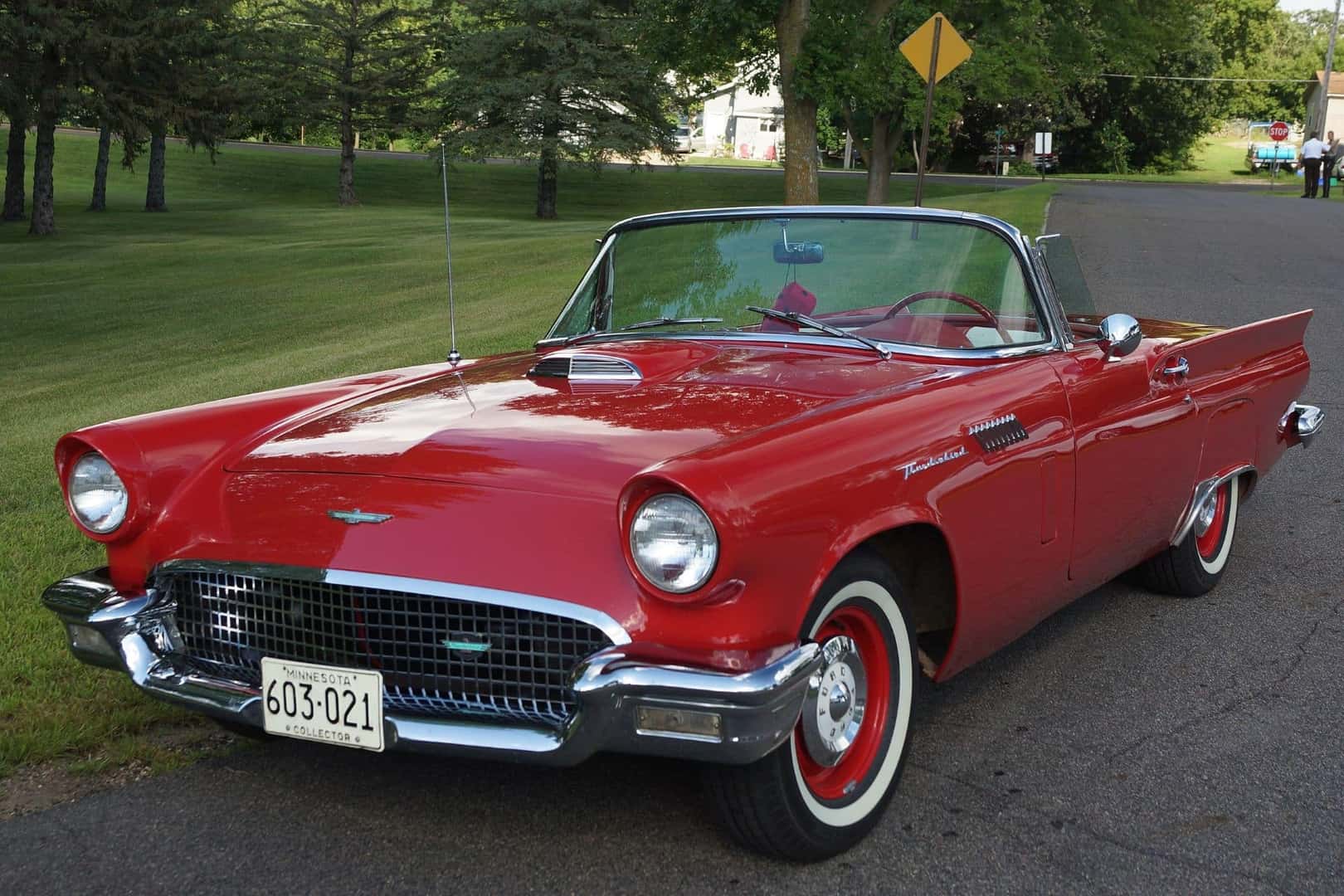
Ford Thunderbird
Just as the Mustang defined an entirely new automotive segment, the Thunderbird did so a decade earlier. While the Mustang has consistently been a compact sports coupe throughout its history, the Thunderbird adapted to consumer demands. It debuted as a 1955 model with only two seats, but it was more of an upscale two-seat convertible than a sports car. This design endured through the 1957 model year, and these T-Birds are the most iconic of the nameplate. However, the two-seat configuration limited its sales potential, prompting the introduction of a new four-seat body for the 1958 model year. Sales quadrupled, and Ford created a new vehicle segment: the personal luxury coupe/convertible.
With the Mustang covering the sporty coupe market, the 1967 Thunderbird grew, dropping the convertible but adding a 4-door model with rear “suicide” doors, and a great grille and hidden headlight treatment. In its sixth generation in 1972, the Thunderbird dropped the 4-door and continued as a personal luxury coupe for its next four consecutive generations. After a five-year hiatus, the Thunderbird returned as a 2-seater from 2002 through 2005. This last model is currently too new to be considered a classic, but classic status is just a matter of time.
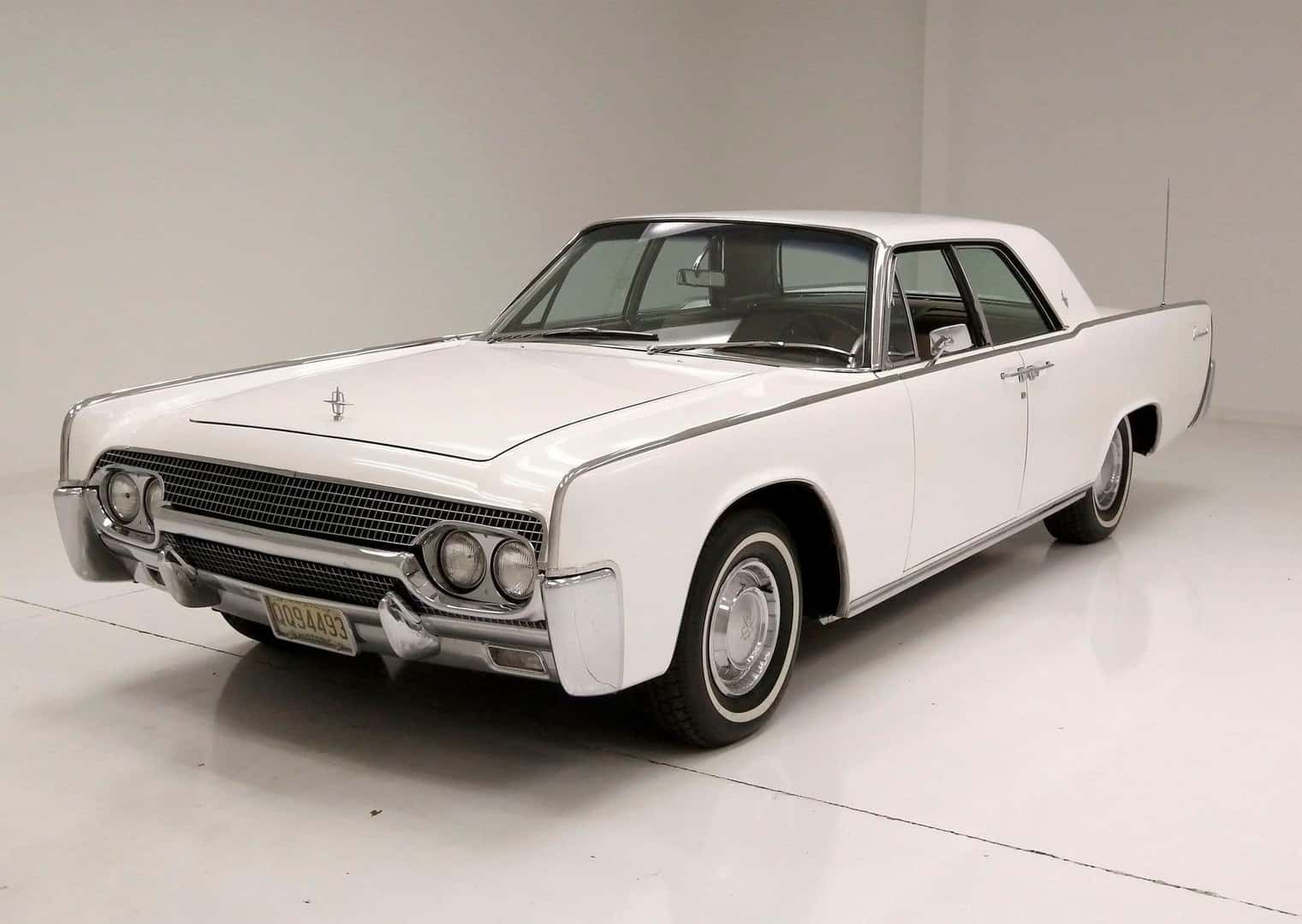
1961 Lincoln Continental
Though not from the Ford division, the 1961 Lincoln deserves mention because of parent company Ford’s vision in transforming the luxury car from the baroque and frankly silly excess of the late 50s to an understated and dignified aesthetic, akin to a well-tailored suit. The other two American luxury brands quickly followed suit, with Chrysler’s Imperial division even poaching Continental designer Elwood Engel to achieve this.
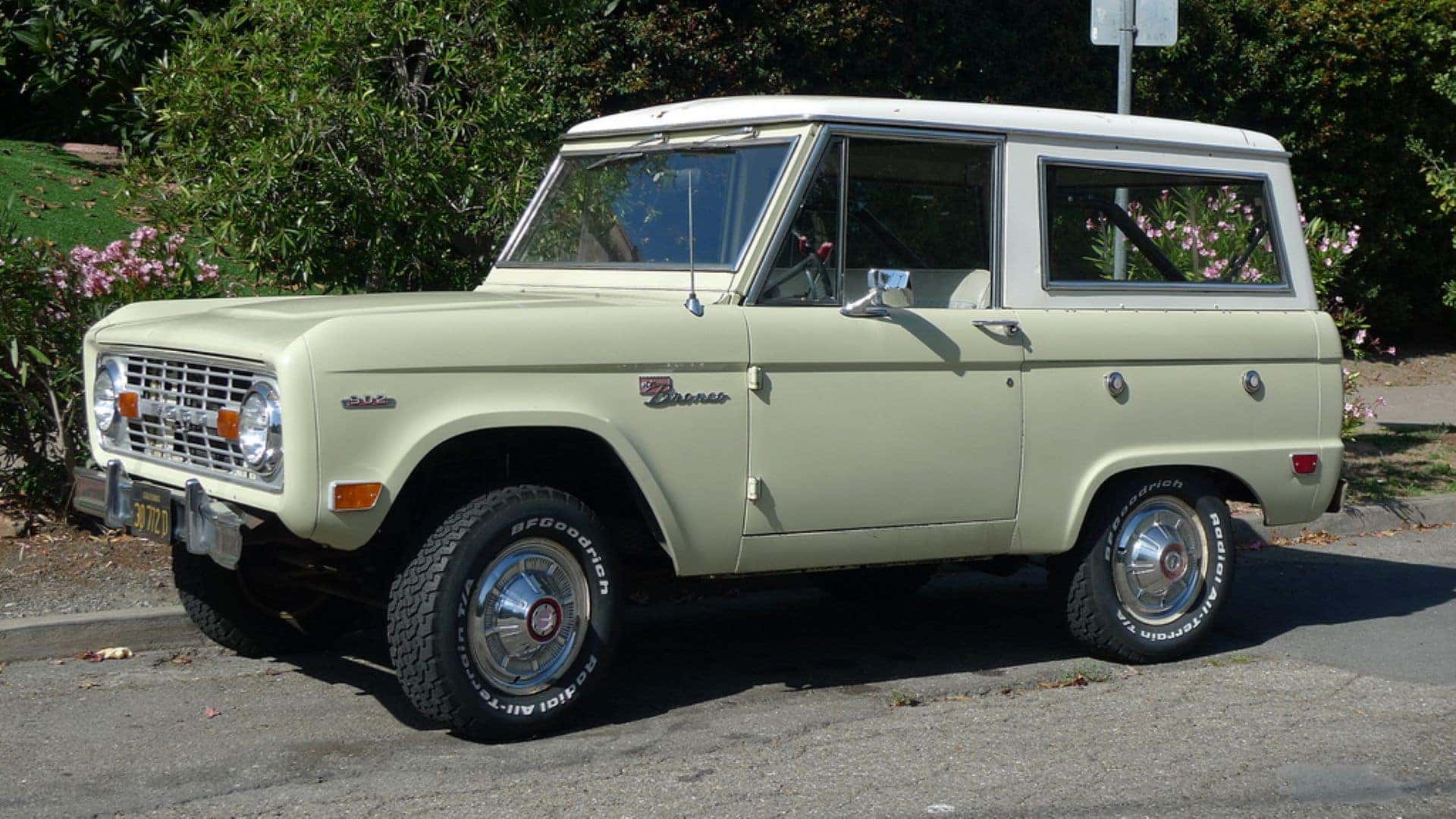
1966-1974 Bronco
Conceived by Donald N. Frey, the same product manager who created the Mustang, the Bronco was an SUV before the term even existed. For once, the rival wasn’t Chevrolet but the Jeep CJ-5 and International Scout, whose owners were surveyed by Ford as to their likes and dislikes, the latter including a lack of size and power. The term G.O.A.T. (Goes Over Any Terrain) featured in modern Broncos actually originated from the original Bronco design brief.
Ford opted for the squared-off proportions of the Scout and applied them to an open-air roadster, a 2-door wagon with a removable top, and a “Sports Utility” with a short pickup bed. A 4-door model was not considered. Four-wheel drive was standard, and the engines mirrored the Mustangs with a 105-horsepower 170-cubic-inch inline-six and the 289-V-8, which was the only V8 available in this small category. Both engines were paired with a 3-speed manual transmission. In 1973, a 200 cubic inch replaced the I-6, the 302 replaced the V8, and a 3-speed automatic transmission became available for the first time.
In 1978, the Bronco returned as essentially a 2-door F-150 wagon, now aimed at the full-size Chevrolet Blazer. A smaller Bronco II, based on the Ranger compact pickup platform, was introduced in 1984, coming closer to the original concept. It was replaced by the 4-door Explorer, which transformed the SUV landscape.
1990 Ford Explorer
In 1984, Jeep added a second set of doors to its Cherokee SUV, significantly broadening its appeal by creating a new type of family vehicle. Ford had its 2-door Bronco II, which competed against the similarly sized S-10 Blazer, but it was the 4-door models that were breaking into the vast family vehicle segment. In March of 1990, Ford replaced the Bronco II with the two- and four-door Explorer. Like the Bronco II, it was based on the Ranger pickup platform and featured the Twin I-Beam suspension for the 4×2 model and the Twin Traction Beam suspension for 4×4 models. However, every effort was made to ensure comfort and practicality for families. Power came from the 4.0-liter Cologne V6, which was an option on the Ranger.
Its success was massive, with sales rising to over 300K after just a few years and exceeding 400K for five years starting in 1998, establishing it as the best-selling SUV in an SUV-hungry market. An influx of competitors, particularly even more family-friendly and efficient crossovers, eventually removed the Explorer from its throne and transformed it into a crossover in subsequent design generations. However, the Explorer still sells close to 200K units a year.
Ford GT
As depicted in the film Ford vs. Ferrari, the V8-powered mid-engine, two-seater Ford GT was designed specifically to beat Ferrari at Le Mans, which it accomplished in 1966 by finishing in 1st, 2nd, and 3rd places before winning the race for the next three consecutive years. Built as a race car, the rules required that a limited number of models be sold to the public. Ford has recreated the GT twice with phenomenal models, but the original will always be regarded as the greatest Ford race car of all time.
There are so many more we only have room to mention them in brief:
1932 Ford V8 – It brought power to the masses, not to mention a few bank robbers, and for decades, it has become the most popular canvas for hot-rodding.
1939 Anglia – Interrupted by the war, this Ford of Europe model brought practical compact transport to a continent plagued by high fuel prices and kept Ford in the worldwide spotlight after Model Ts faded from the roadways.
1965 Galaxie 500 – With its fresh, sharp rectilinear styling, this full-size sedan, at the heart of the Ford family car lineup, replaced its rear leaf springs with coil spring suspension, significantly improving the quiet and comfortable ride for this category.
1986 Taurus – The family sedan that revolutionized the design of family sedans. It is challenging to convey how groundbreaking its streamlined design was for that era, all while introducing front-wheel drive efficiency to hundreds of thousands of American households.
These and numerous other classic Ford models from its past demonstrate that Ford has always been an innovator. You can see that today, with the latest in Mustang performance, the rugged performance of the reintroduced Bronco, and being at the forefront of the EV transition with the exciting Mustang Mach-E. Ford’s future classics are waiting for you to sample at Dick Smith Ford.

0 comment(s) so far on A Long History of Classic Fords