

Bronco Sport Versus Escape: Which Is Best for You?
The compact crossover segment is the most popular in the U.S. It is also the most competitive, with more competing models than any other category, including models from both mainstream and luxury brands. Adding to that plethora of models is Ford, with not one but two models competing in this category—the Escape and Bronco Sport. If you are looking for a Ford in this class, you have to ask, which is better for you? Dick Smith Ford of Columbia can’t answer that for you, but we can give you information to help you decide for yourself.
Similarities
Let’s start with what does not differ between these two models. Both are built off the same basic platform, which they share with the Maverick pickup. They also both have the same drivetrain with a 1.5-liter turbocharged inline-three connected to an eight-speed automatic transmission. The Escape comes standard with front-wheel drive (FWD) with all-wheel drive (AWD) available, while the Bronco Sport comes standard with AWD. They also share the same front and rear suspension and steering system. Despite appearances that suggest the contrary, they even share the same 8.0-inch ground clearance across most of the model lines.
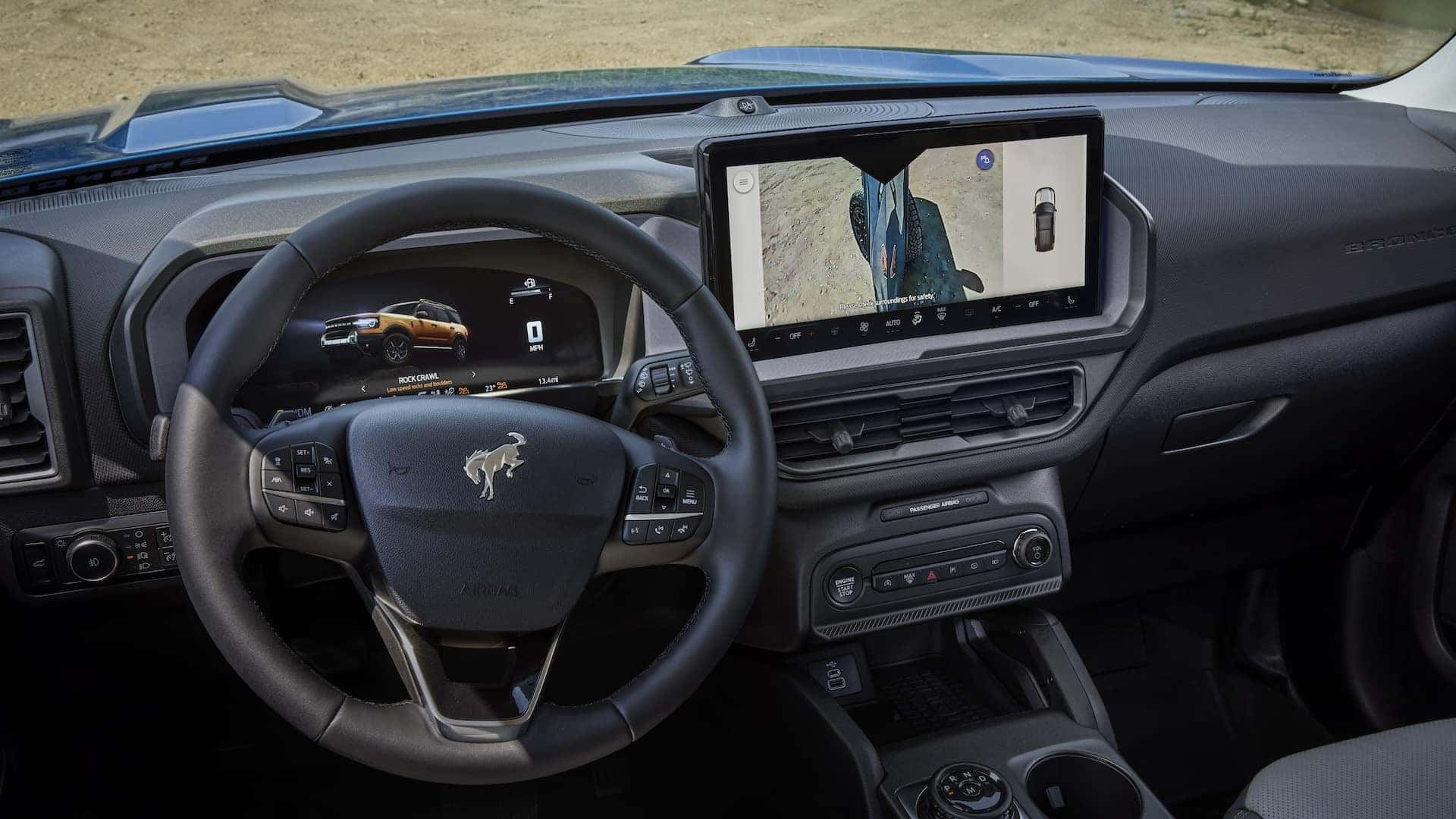
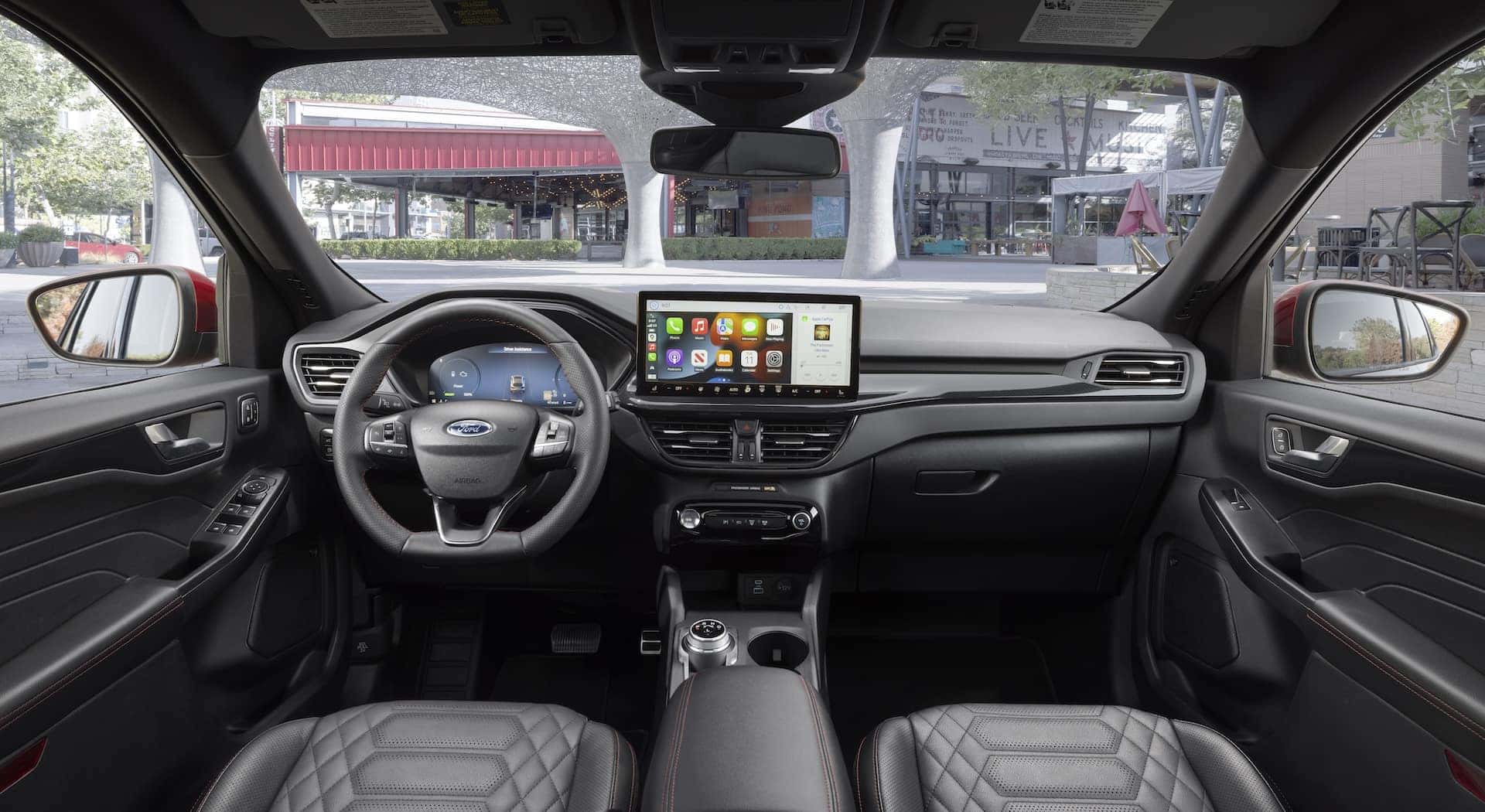
The dashes are differently styled, but they both have the same steering wheels. Both start with 8.0-inch center touchscreens, growing to very sizable 13.2 inches as an option (or included on upper trims). Likewise, both models start with analog gauges with 4.2-inch instrument clusters, with fully digital gauge clusters on higher trim levels. With the rear seatbacks down, both models have the same 65 cubic feet of cargo volume. Shoulder, hip, and front legroom are largely the same.
Safety technologies are also common for both vehicles, including:
- Pre-Collision Assist with Automatic Emergency Braking
- Lane-Keeping System
- BLIS® with Cross-Traffic Alert
- SOS Post-Crash Alert System™
- Driver knee bag
The NHTSA won’t help you with your decision, as both models earned 5-star overall ratings. The IIHS also gives identical scores for each.
Largely due to its availability with FWD, the Escape has a lower starting price of $29,495 compared to $29,795 for the Bronco Sport. When AWD is added to the Escape, the cost is $31,665 for the Escape, and the price ranges run roughly parallel across the model lines.
Mechanical Differences
Although they have the same engine, they are tuned differently. Horsepower is nearly the same with 180 for the Escape and 181 for the Bronco Sport. Conversely, the Escape has 199 lb-ft of peak torque compared to the Bronco Sport’s 190.
While the Escape’s optional and Bronco Sport’s standard AWD systems are similar, the Bronco adds the G.O.A. T. (Goes Over Any Type of terrain) system with five modes for specific situations including Sand, Slippery, Sport, Eco, and Normal.
The exterior shapes are a likely factor in fuel economy. The Bronco Sport has an EPA city/highway rating of 25/29 mpg, respectively, compared to 26/32 for the more aerodynamic Escape with AWD. The FWD Escape is rated at 27/34 mpg.
If fuel efficiency is a high priority, it must be noted that the Escape is available as a hybrid, which significantly improves mpg in the city, with both FWD and AWD models rated at 42 mpg in the city and 36 mpg on the highway. The Escape goes a step further with a plug-in hybrid model. This FWD-only model can give you approximately 37 miles of EV-only range, after which it is rated at 40 combined mpg. The Bronco Sport has no hybrid drivetrains. Instead, it goes in the opposite direction with the top-ranging Badlands model sporting a 2.0-liter turbocharged inline-four that is good for 250 horsepower and 277 lb-ft of torque. Mpg for this model, which also includes all-terrain tires, is 21 city/26 highway.
Exterior
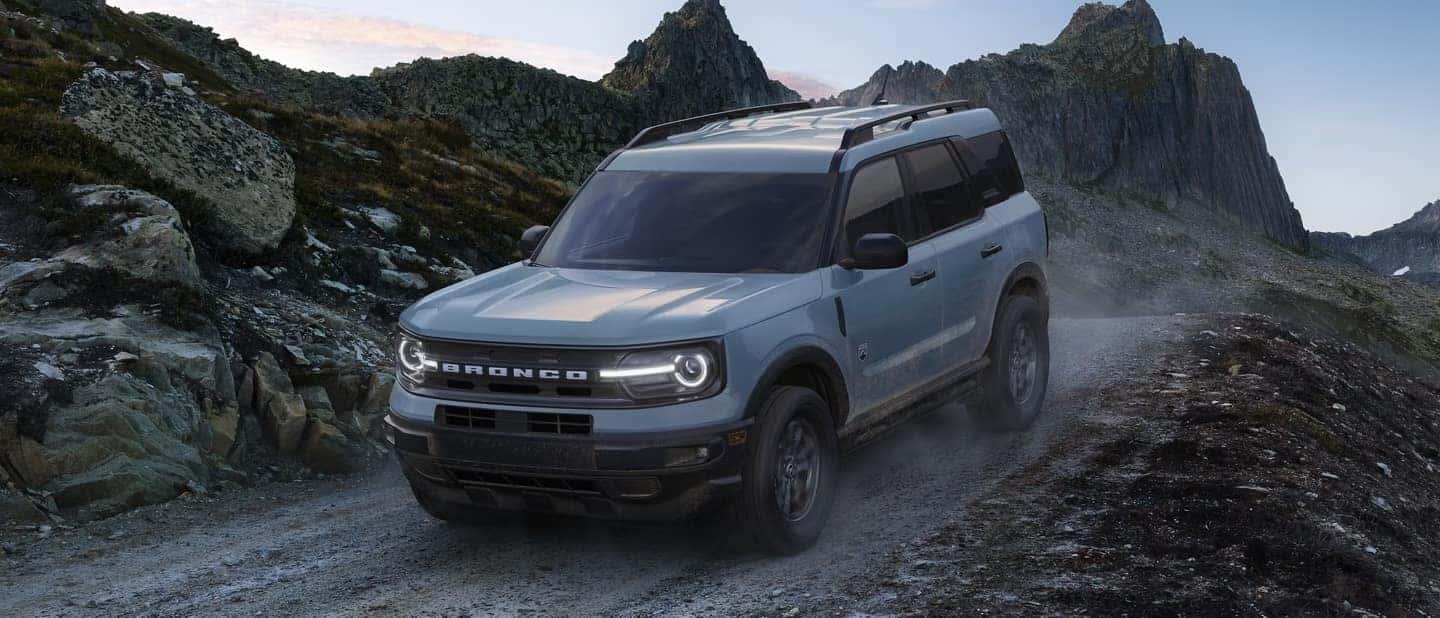
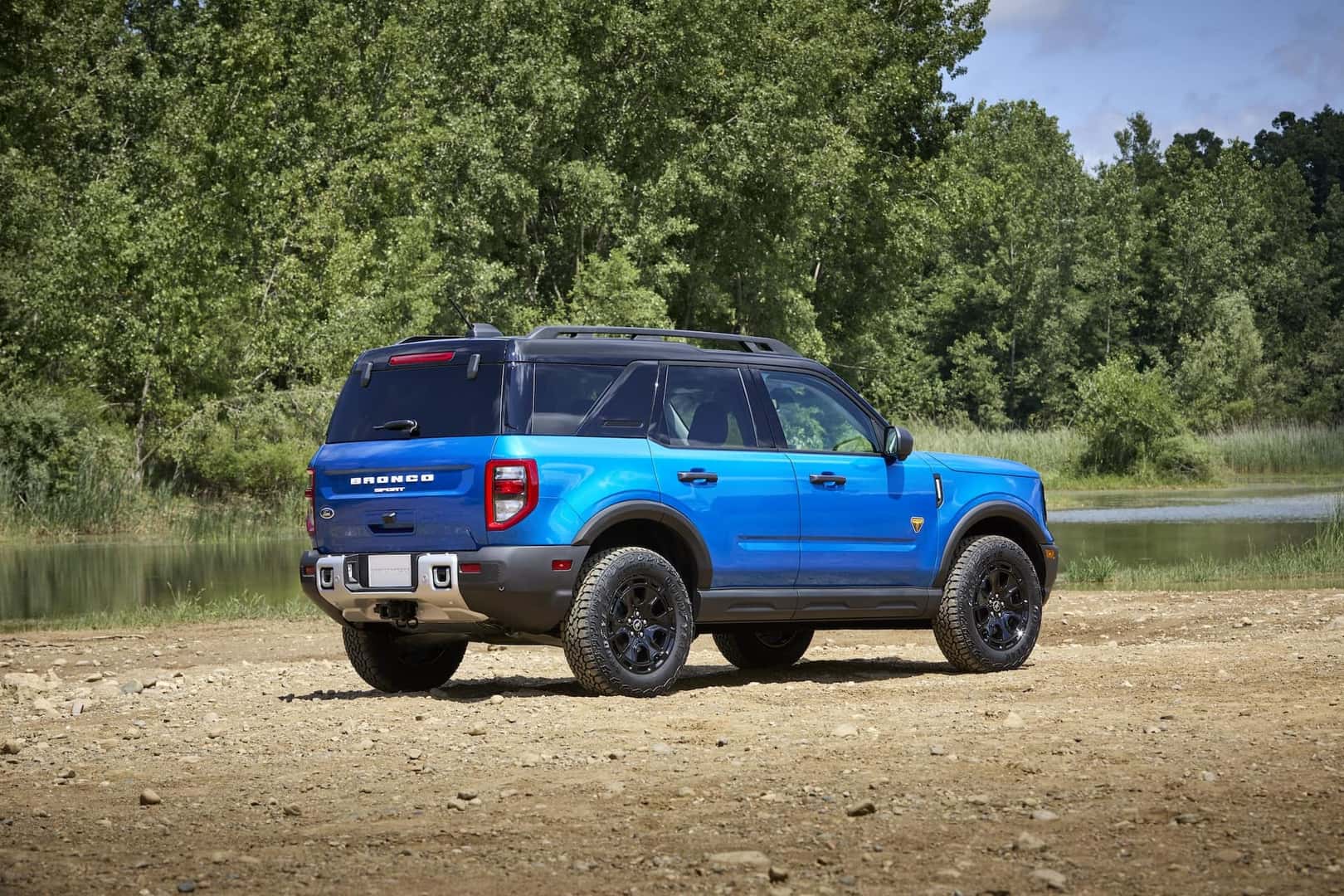
It is possible—if not likely—that the exterior differences alone are enough for you to make your choice; they couldn’t be more different. The Bronco Sport has the rugged squared-off appearance of the larger Bronco and the rectilinear-shaped SUVs of the past. With its retro round headlights (with very non-retro LED lighting elements), big BRONCO lettering across the grille, roof rails, and many off-road-focused accessories, the Bronco Sport almost defines macho positioning.
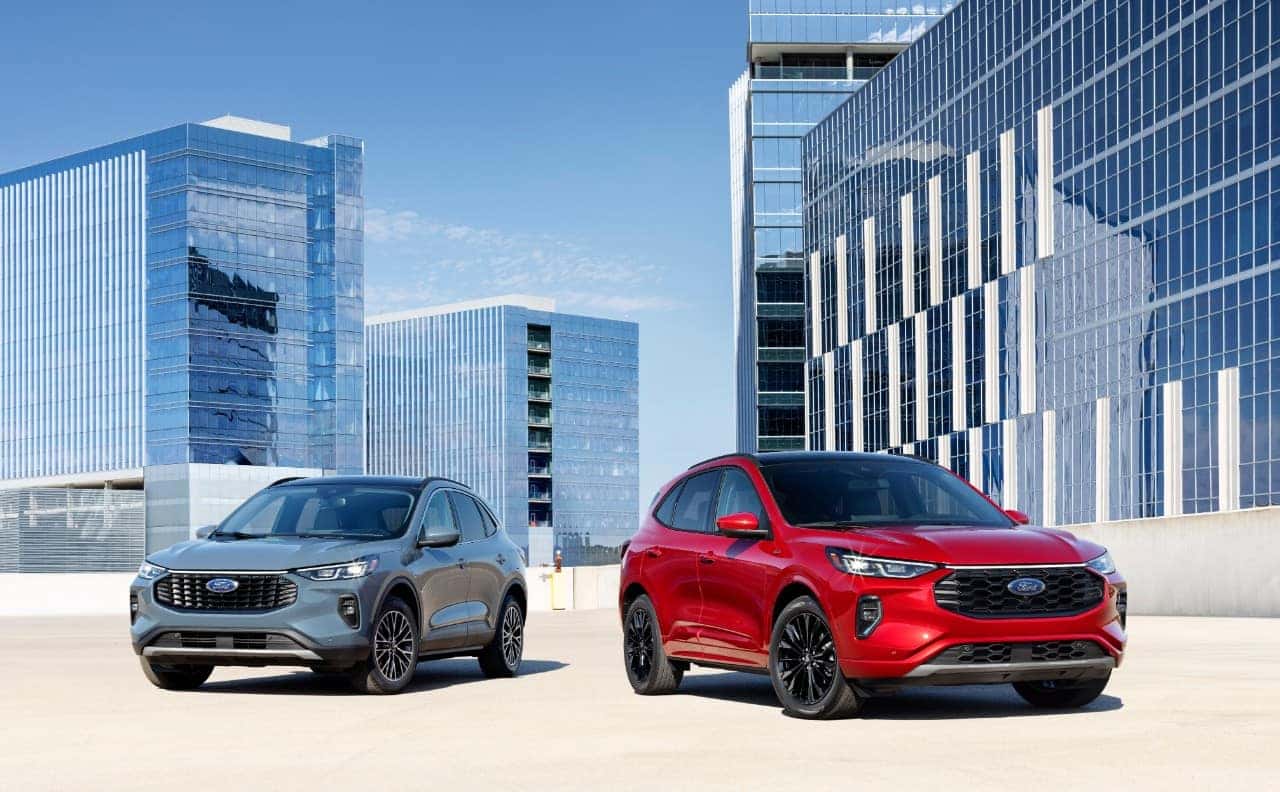
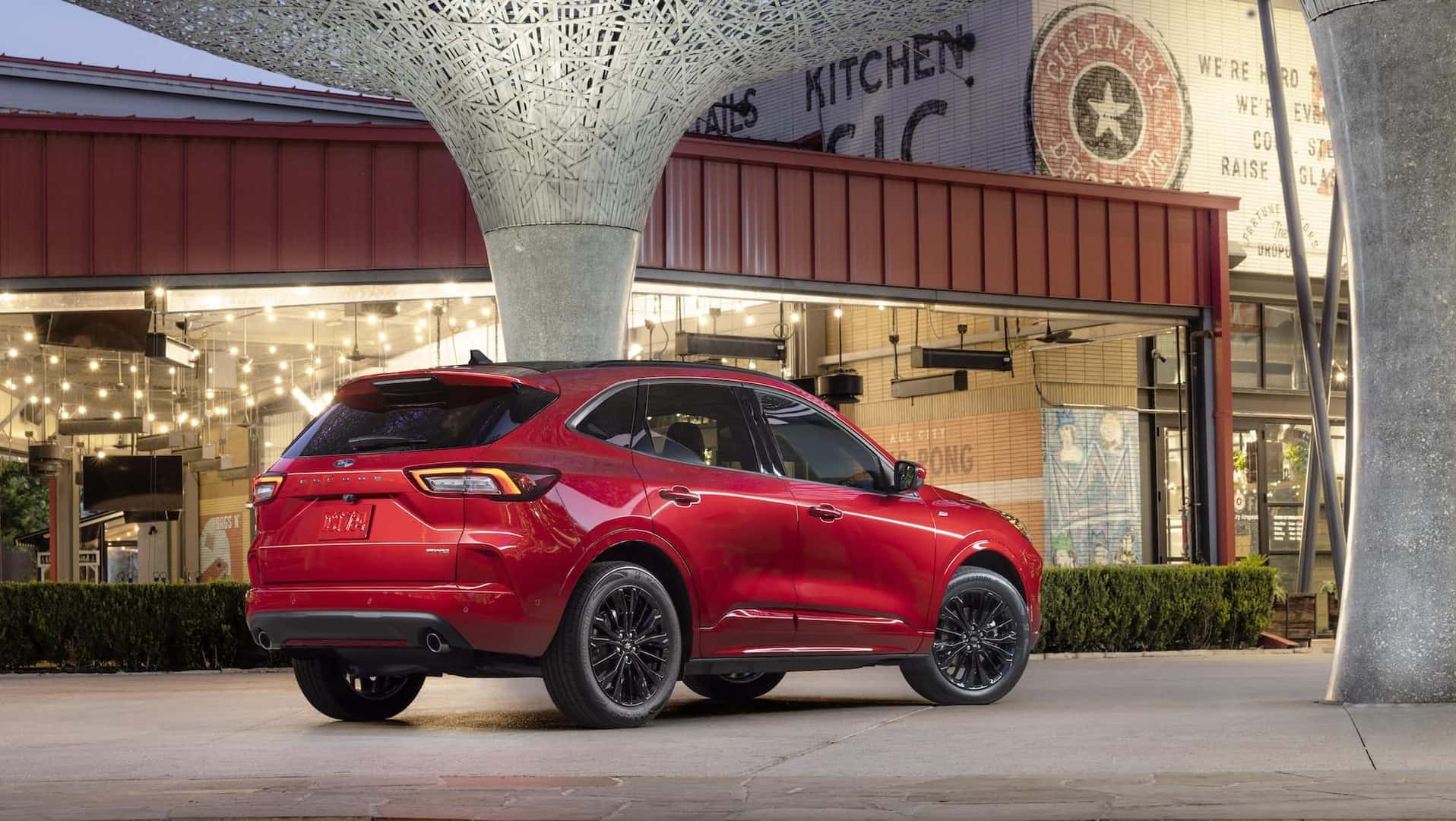
The Escape is the Bronco Sport’s aesthetic opposite. Up front, the grille and headlight arrangement have a bit of Mustang Mach-E about them, and the rest of the body is curved wherever it can be. There is no cladding, roof racks, or skid plates. Free of the need to invoke off-road imagery of any kind, the Escape makes clear it is about paved surfaces, and it isn’t ashamed to show it.
Both models share 74 inches of width. They diverge from there. The Bronco adds four more inches of height (70 versus 66). The Escape has a two-inch-longer wheelbase (107 versus 105) and with less concern about approach and departure angles, is eight inches longer overall (181 versus 173).
Interior
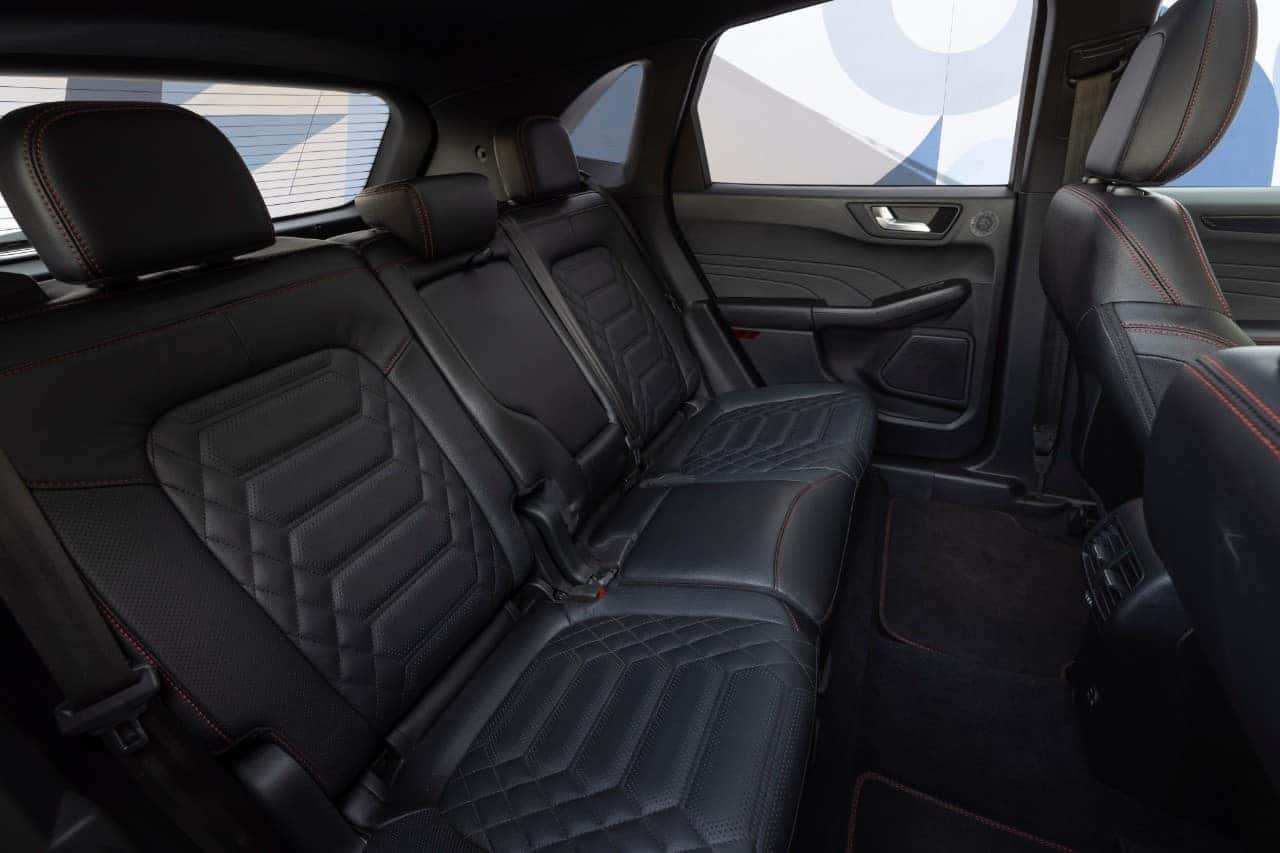
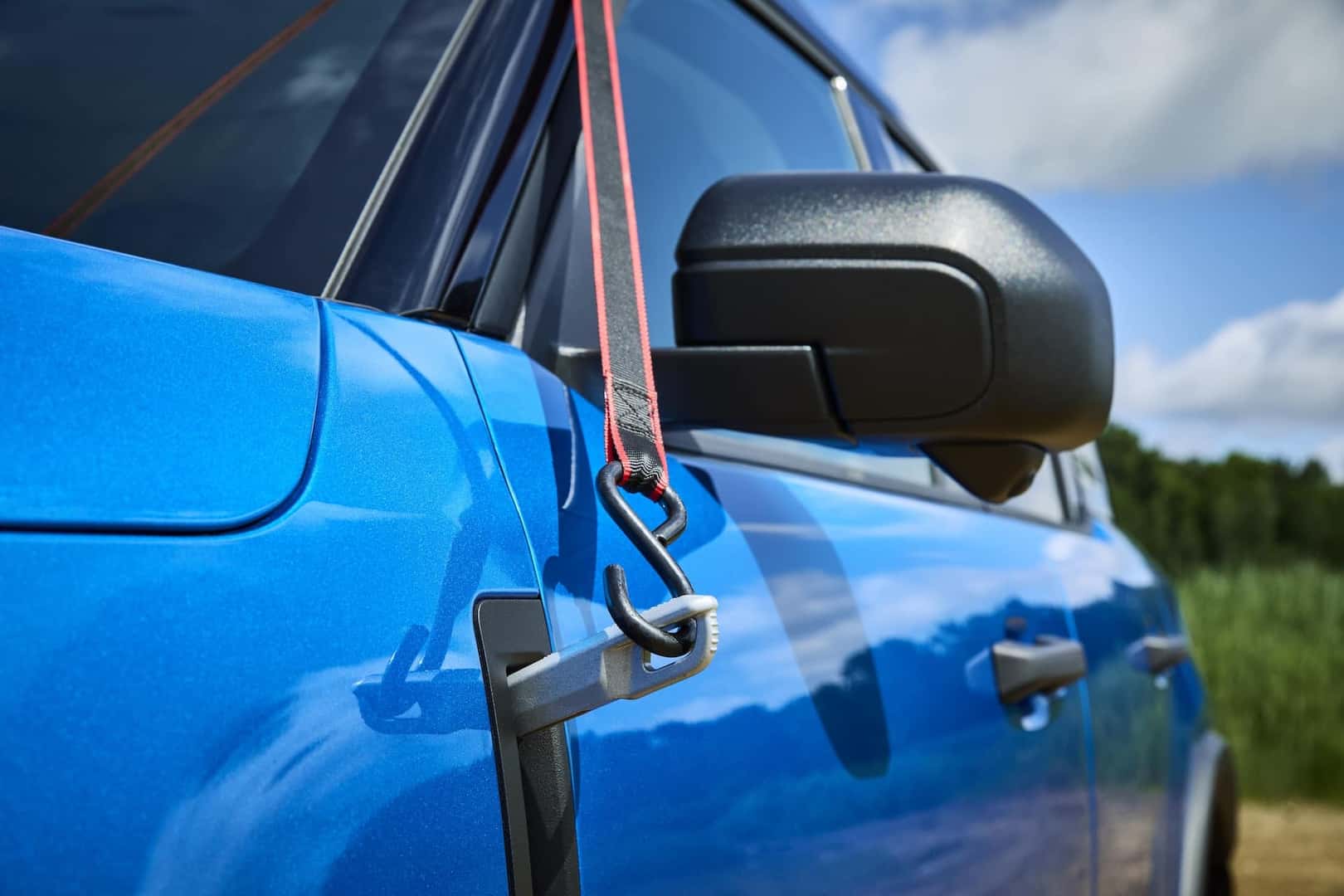
Although the models have completely different dashboard shapes, the switchgear, screens, and climate control vents are in the same place. Like its exterior, the Bronco Sport dash eschews curves and features materials that look ready to take a beating and wash easily. The cargo area has a rubberized floor and features cargo tie-down carabiner hooks, Molle straps, and cargo organizers, which the Escape lacks. The Escape dash features many more curves and angles, though the material itself differs little from the Bronco Sport. The cabin and cargo floor are carpeted. The seats are less bolstered than the Bronco Sport’s.
The Bronco Sport runs on the SYNC® 3 infotainment operating system, while the Escape features SYNC® 4, which includes wireless Apple CarPlay and Android Auto compatibility, whereas the Bronco Sport system requires a connection for phone compatibility.
The Bronco Sport leverages its taller cabin for two more inches of headroom for the front seats (42 versus 40) and three more in the rear (42 versus 39). Conversely, the Escape leverages its greater length for more rear legroom (41 inches versus 39). And while both models have the same maximum cargo space, with the rear seatbacks up, the Escape offers more room back there with 38 cubic feet compared to 33 for the Bronco Sport. That measurement stops at the height of the rear seatbacks, so you will likely have additional space in the Bronco Sport if you stack things to the headliner.
Summary
The Bronco Sport has all the active lifestyle imagery that attracted people to SUVs in the first place. Its standard AWD with the G.O.A.T. system, short overhangs, tie-down cargo features, and available off-road accessories give it legitimate advantages on rough unpaved surfaces. The Escape places its advantages where crossovers are usually used, with better fuel economy, more rear legroom, greater cargo capacity when the rear seats are occupied, and the convenience of wireless smartphone compatibility.
Which appeals to you is up to you, but you are fully invited to not have your decision made when you come to Dick Smith Ford of Columbia to test drive both models. You can’t go wrong with either choice.

0 comment(s) so far on Bronco Sport Versus Escape: Which Is Best for You?