

Car and Driver Compares the Ranger Raptor to the Colorado ZR2 Bison and Tacoma TRD Pro
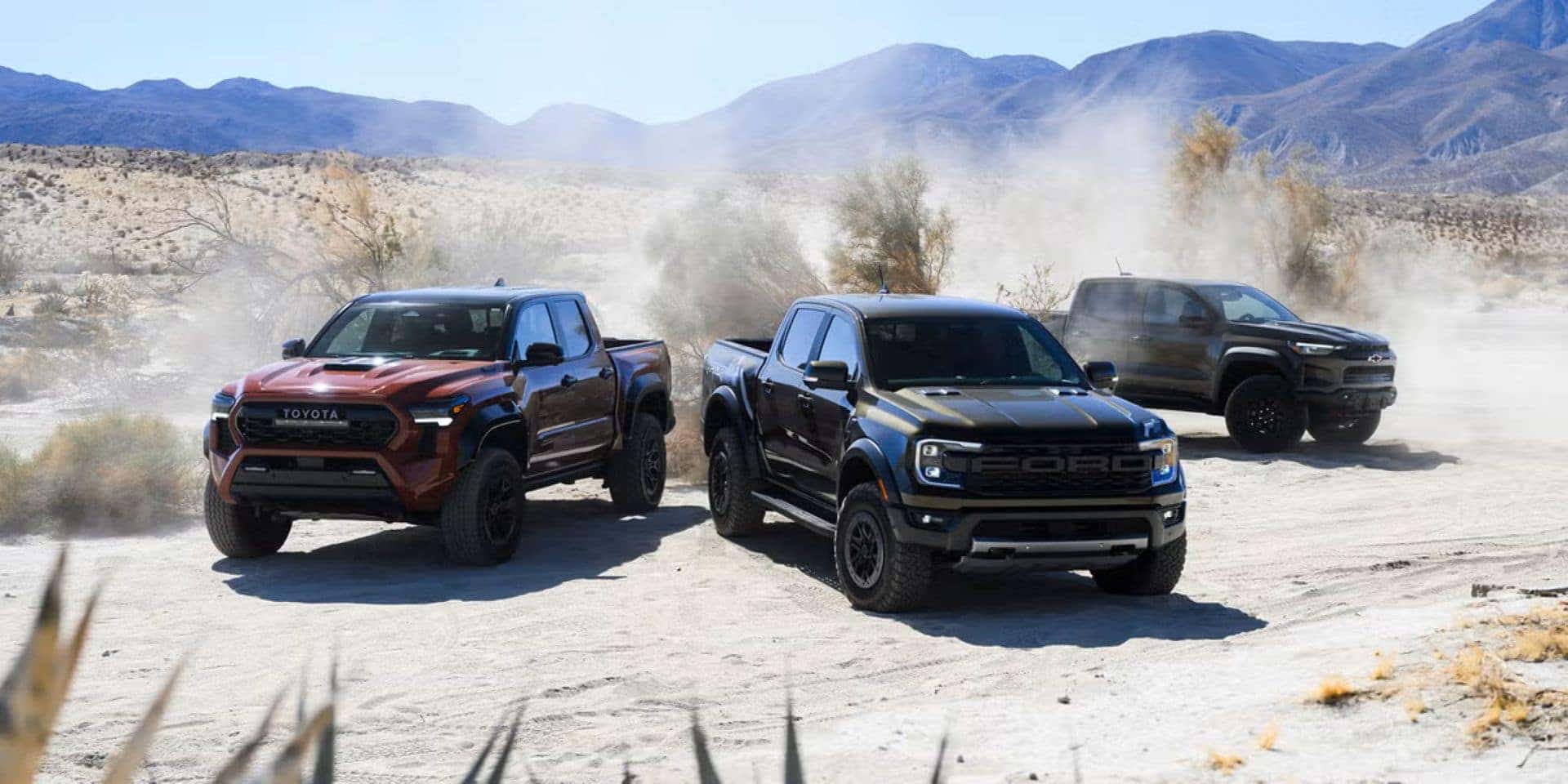
When you are off-road, having plenty of power is beneficial, along with chunky tires and long suspension travel. Being small and lighter in weight also helps, which is why motocross bikes used to dominate the off-road parks and trails. However, two-wheeling isn’t for everyone; sometimes, you want a bit more protection around you, the company of passengers, and space for a cooler in the back seat. Car and Driver examined the three most off-road capable mid-size trucks available from Ford, Chevrolet, and Toyota and compared them both off- and on-pavement. Dick Smith Ford shares its findings.
The competitors included the Ford Ranger Raptor, Chevrolet Colorado ZR2 Bison, and the Toyota Tacoma TRD Pro. All three of these trucks spare you from trips to aftermarket shops by incorporating aftermarket components directly from the factory. Each features a four-door cab and short bed (the only way any of them can be configured).
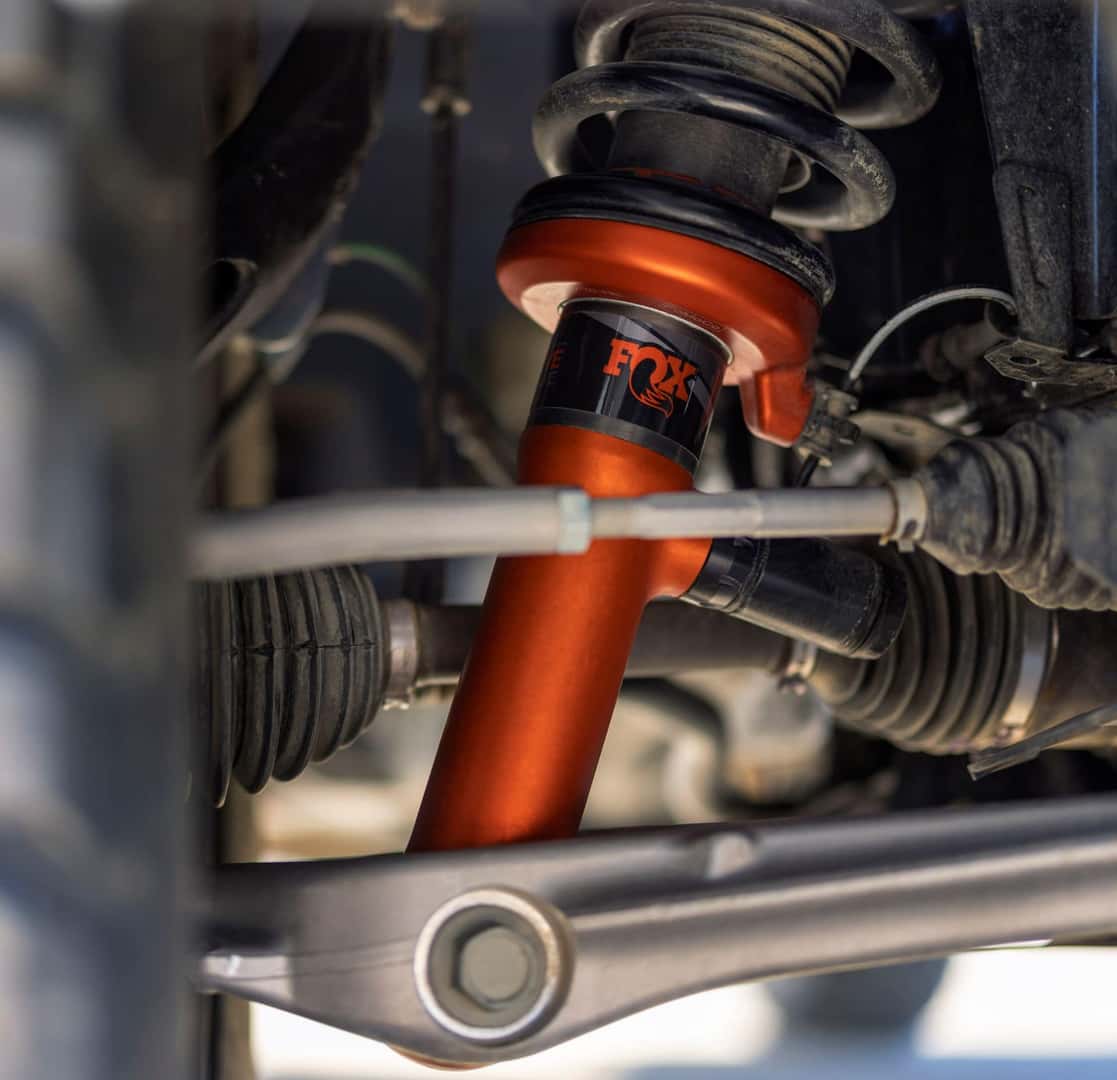
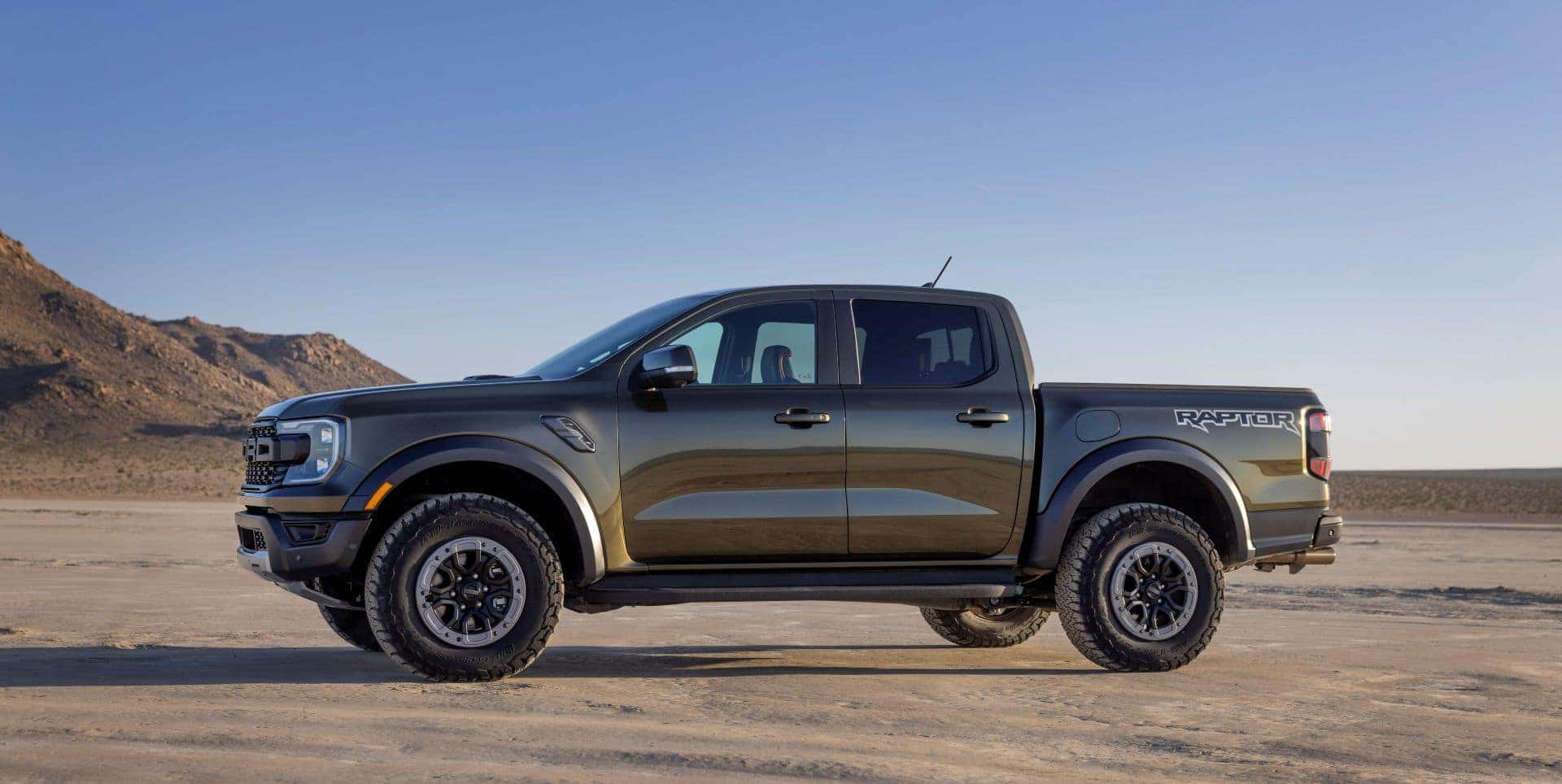
The Raptor leads in power with the only V6 in the group. Specifically, it has a 3.0-liter twin-turbo V6 producing 405 horsepower and 430 lb-ft of torque, paired with a 10-speed transmission. It rides on 33-inch BFGoodrich All-Terrain T/A KO3 tires mounted on optional beadlock-capable 17-inch wheels. Behind the wheels are electronically controlled Fox live-valve dampers that can have their settings adjusted from inside the cabin. The wheels were the significant option ($1,495), and with an additional spray-in bed liner, a keyless-entry keypad, and optional Raptor graphics, the Raptor was priced at $60,150. This may seem high for a mid-size truck, but it was the least expensive of the three.
The Toyota Tacoma TRD Pro features a hybrid drivetrain optimized for power over efficiency. It combines a 2.4-liter turbocharged inline-four engine with a 48-hp electric motor, resulting in a total output of 326 horsepower and 465 lb-ft of torque. Additionally, the Tacoma TRD Pro is equipped with 33-inch tires and Fox dampers; however, these adjustments are strictly manual, which means scooching your back in the dirt to make adjustments. When equipped with a bed mat, tailgate insert, and ball mount, the price reaches $65,869.
The Chevrolet Colorado ZR2 Bison sits on 35-inch Goodyear Wrangler Territory MT tires. The ZR2 Bison boasts the highest-powered version of GM’s turbocharged 2.7-liter inline-four engine, delivering 310 horsepower and matching the Raptor with 430 lb-ft of torque. The Bison name indicates numerous components from American Expedition Vehicles (AEV), including beadlock-capable wheels, front and rear bumpers, and skid plates. It is also equipped with Multimatic spool-valve dampers which are effective off-road while providing a decent on-pavement ride. The size of the tires necessitates that the spare is mounted in the bed, which looks the business but significantly reduces the Colorado’s utility. With the addition of a Technology Package and sunroof, the Colorado ZR2 Bison is priced at $ 63,845, placing it between the other two trucks.
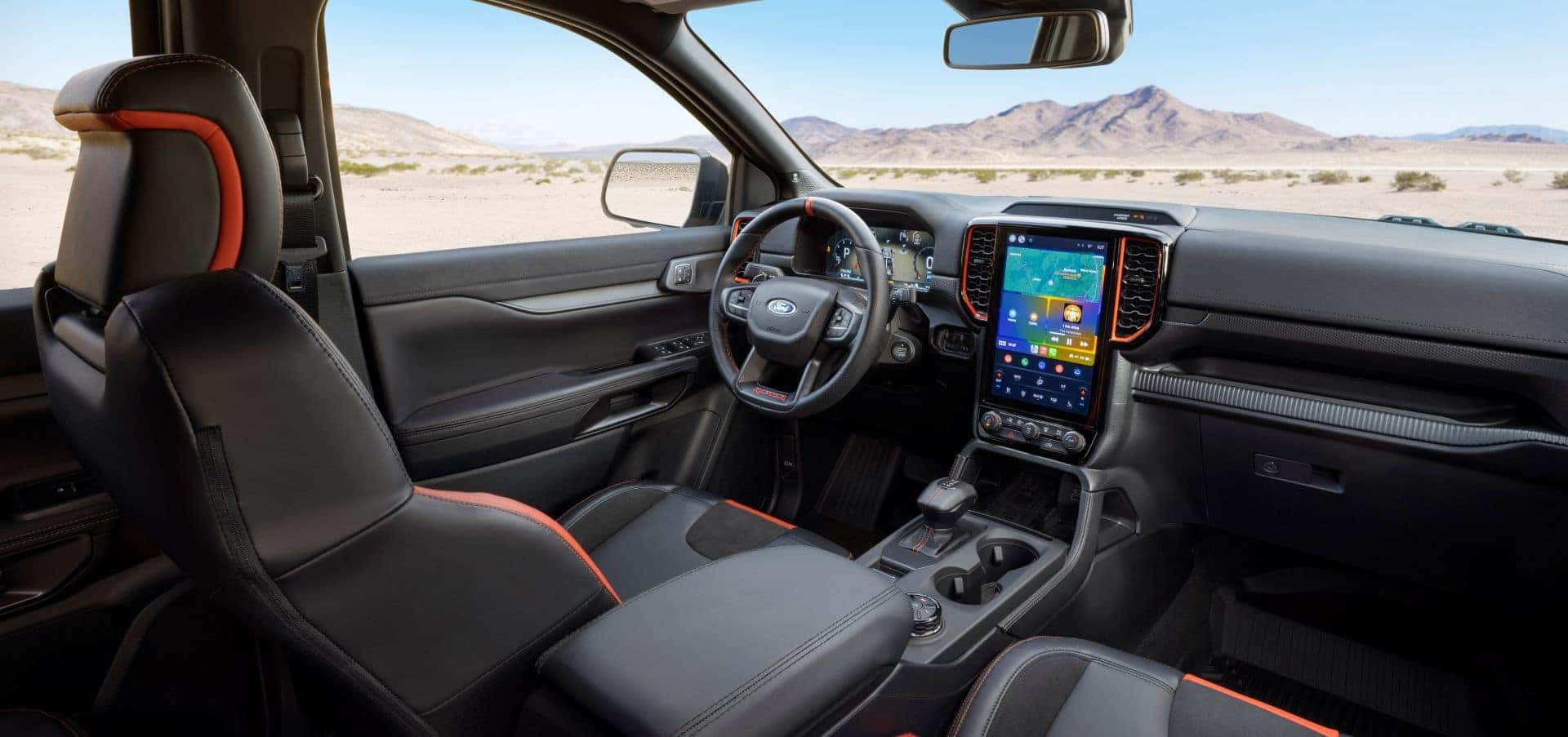
Before getting to their capabilities, it should be noted that the Ranger is the best at functioning as a four-door truck. As mentioned, the Colorado’s spare tire takes up valuable space in the truck bed. With the Tacoma TRD Pro, the issue lies within the cab. The front seats are fitted with pneumatic dampers designed to absorb bumps that arise through the suspension. Car and Driver found them to perform well, but externally mounted dampers encroach on rear-seat legroom and subject rear passengers’ knees to some very unforgiving hardware. As Car and Driver stated about the TRD Pro back seat: “It’s miserable for two, unbearable for three…”
The Ford’s greater horsepower was evident during the pavement tests, achieving a quarter-mile time of 14.1 seconds at 95 mph, compared to 15.3 seconds at 83 mph for the Toyota and 15.6 seconds at 87 mph for the Chevrolet. When accelerating from 50 to 70 mph, the Ranger Raptor reached that speed in 3.9 seconds, whereas the Tacoma TRD Pro took 4.7 seconds and the Colorado ZR2 Bison took 5.5 seconds. 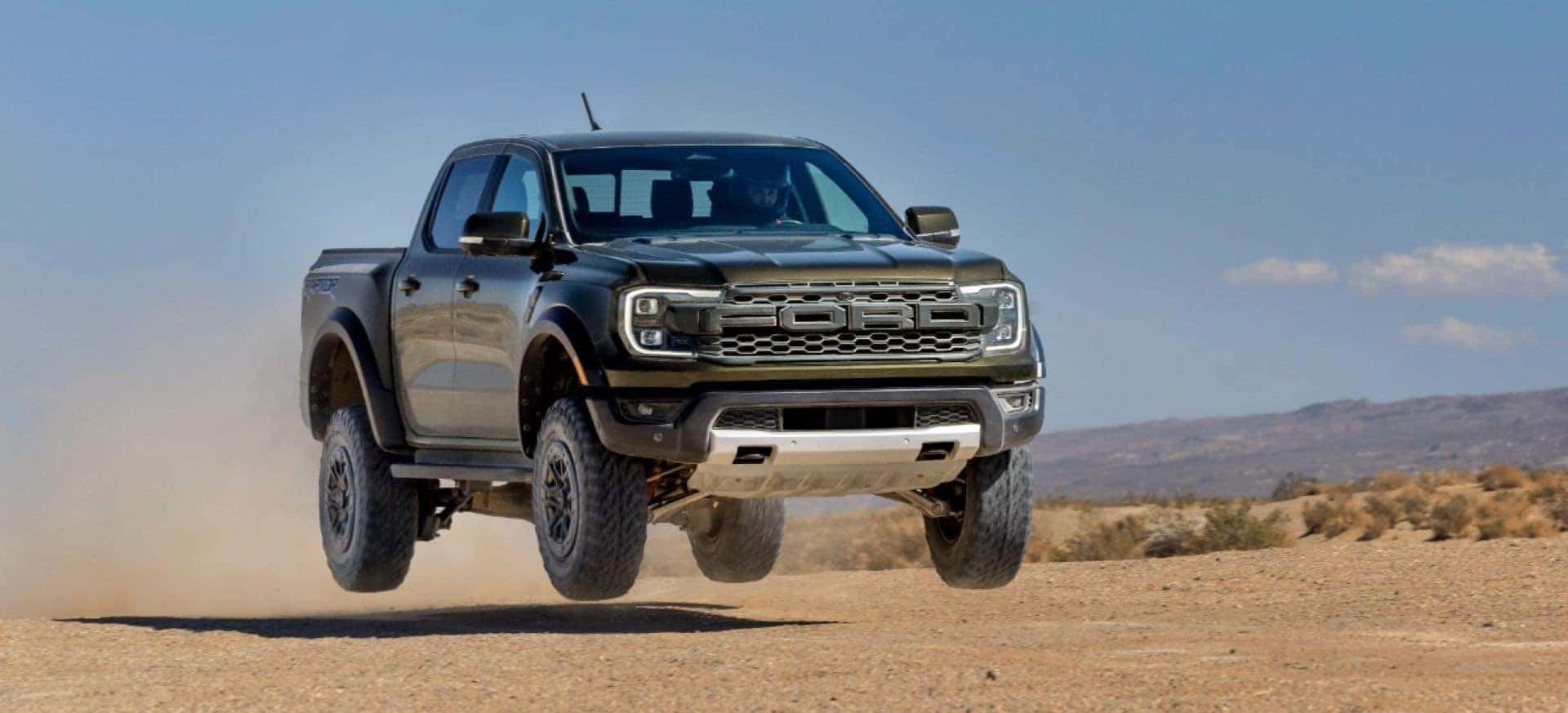
Car and Driver pointed out that superiority on pavement doesn’t always translate to dirt and sand, but this time it did. References to the Raptor’s performance included editor quotes like, “I like that it has an attitude. It wants to be driven hard. It really feels like a Baja truck,” and quite simply, “The Raptor did everything right.” They found the adjustable off-road modes useful and the truck’s ability to select 4Auto, 4H, or 4L while automatically switching off traction assistance to work very well. This is also the only truck with steering wheel paddle shifters, which they found especially useful in the Baja driving mode.
All three trucks were deemed quite capable. The manual settings on the TRD Pro suspension presented a steep learning curve for those unfamiliar with the truck. The Colorado ZR2 Bison was characterized as “well damped and smooth,” but the rear was found to be significantly less stable on high-speed washboard surfaces than the Ranger Raptor.
The Ranger Raptor was described multiple times as the crowd favorite, so it is unsurprising that it emerged as the clear winner in this comparison. It offers excellent off-road capability along with minimal sacrifice on-road. Additionally, it has the lowest price. The TRD Pro held a narrow lead over the ZR2 Bison for second place.
As a highly specialized truck, a Ranger Raptor isn’t always available in the Dick Smith Ford inventory. However, a conversation with one of our sales professionals can help locate one for you and arrange for delivery. If the Raptor is more extreme than you require, much of its excellence is also found in the rest of the Ranger model line.

0 comment(s) so far on Car and Driver Compares the Ranger Raptor to the Colorado ZR2 Bison and Tacoma TRD Pro